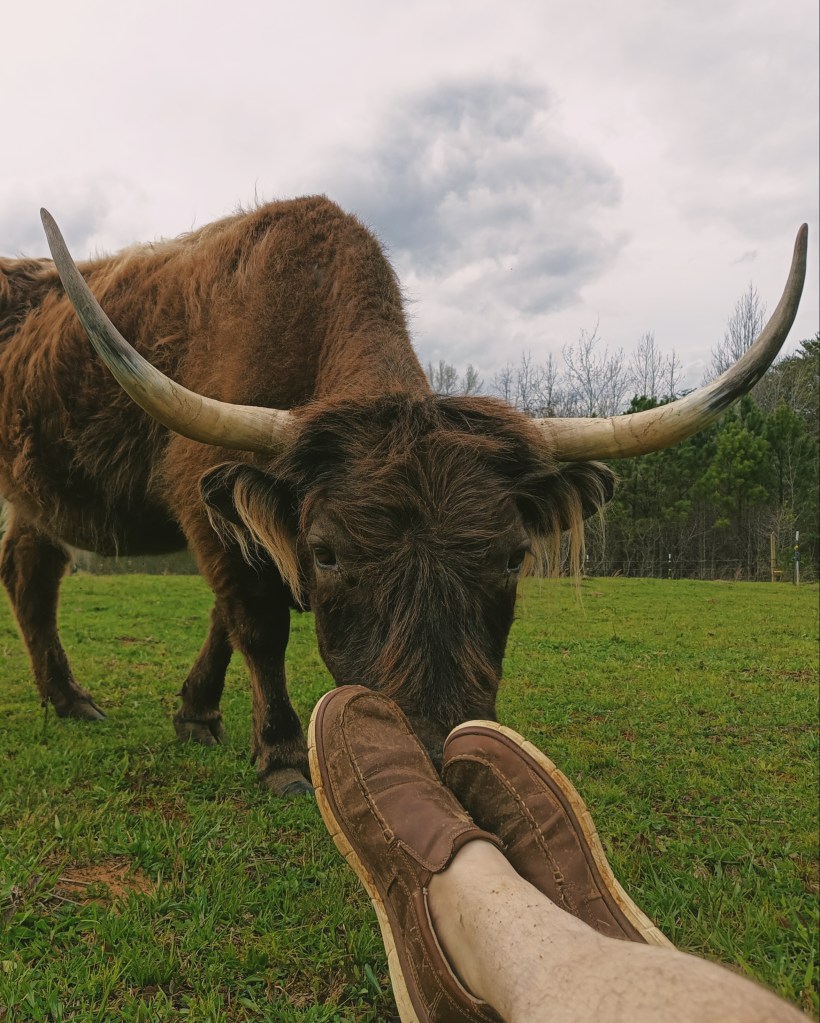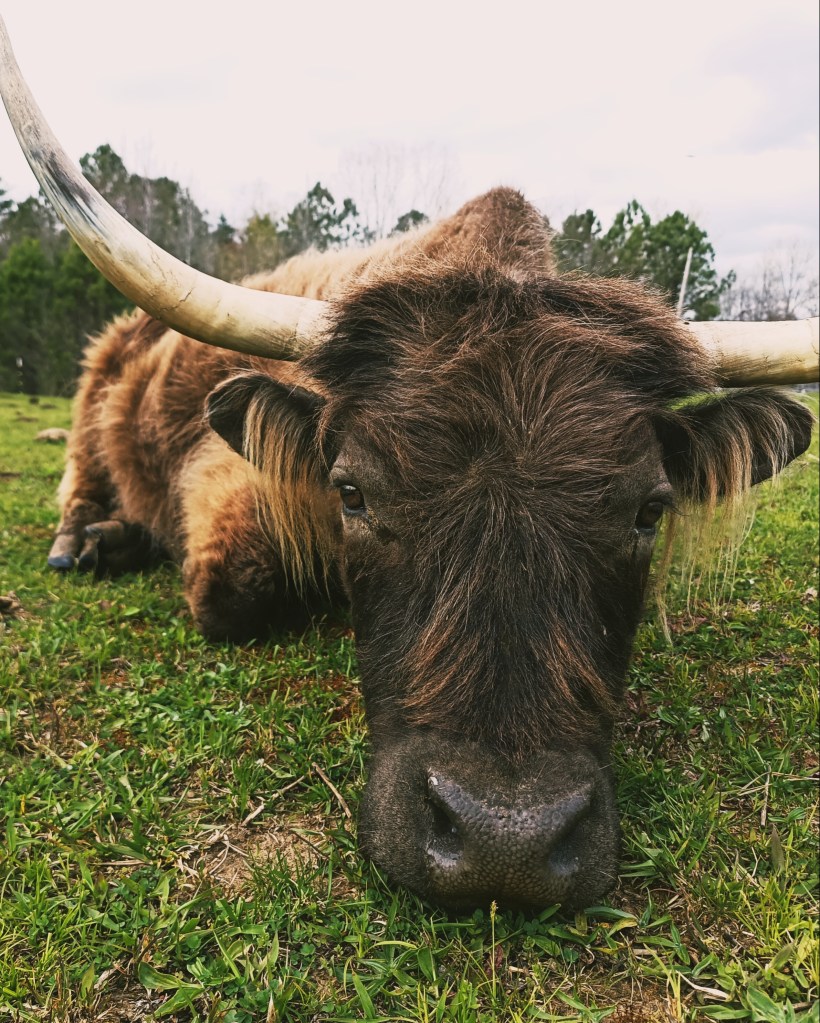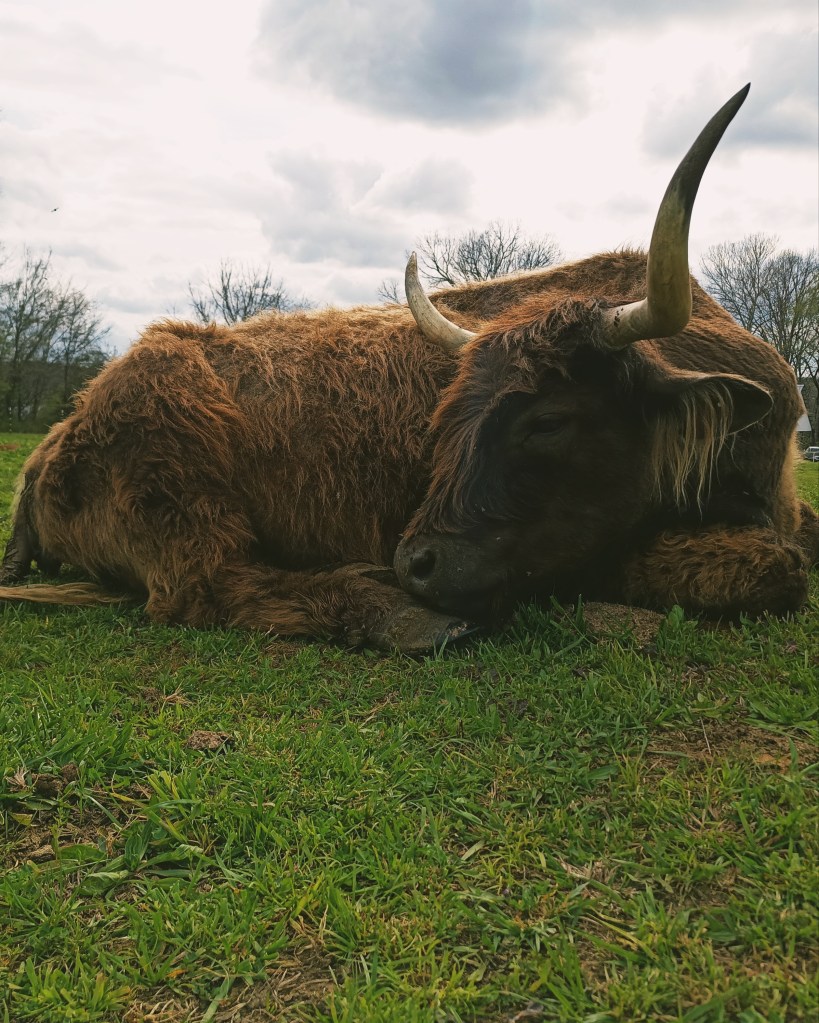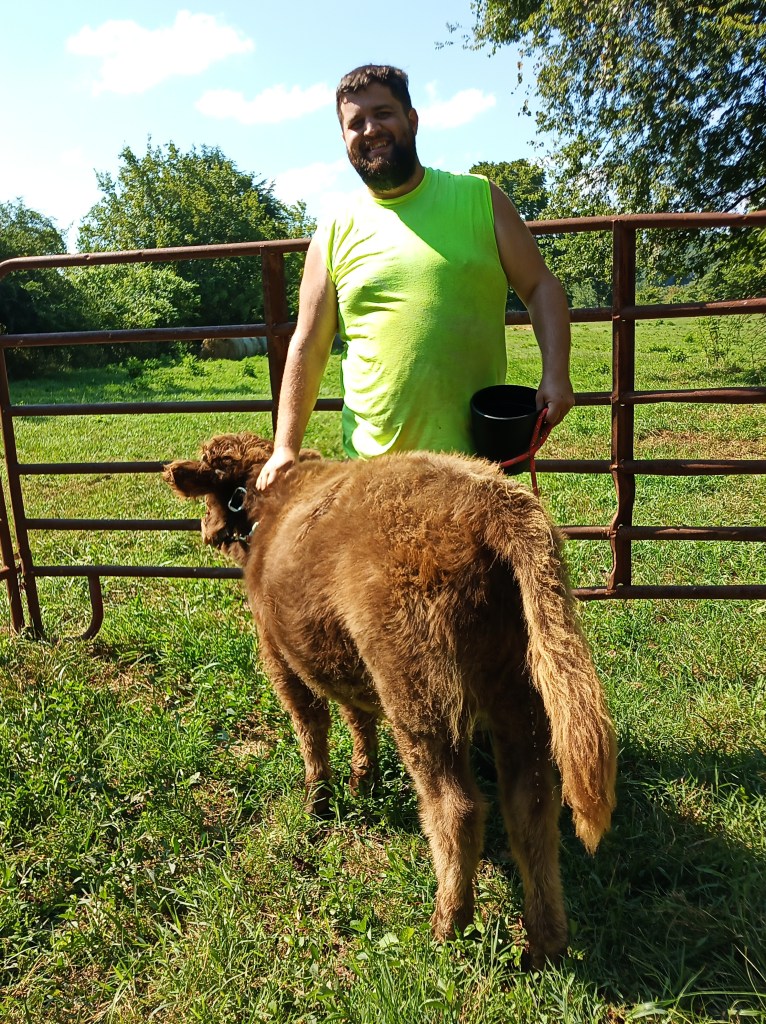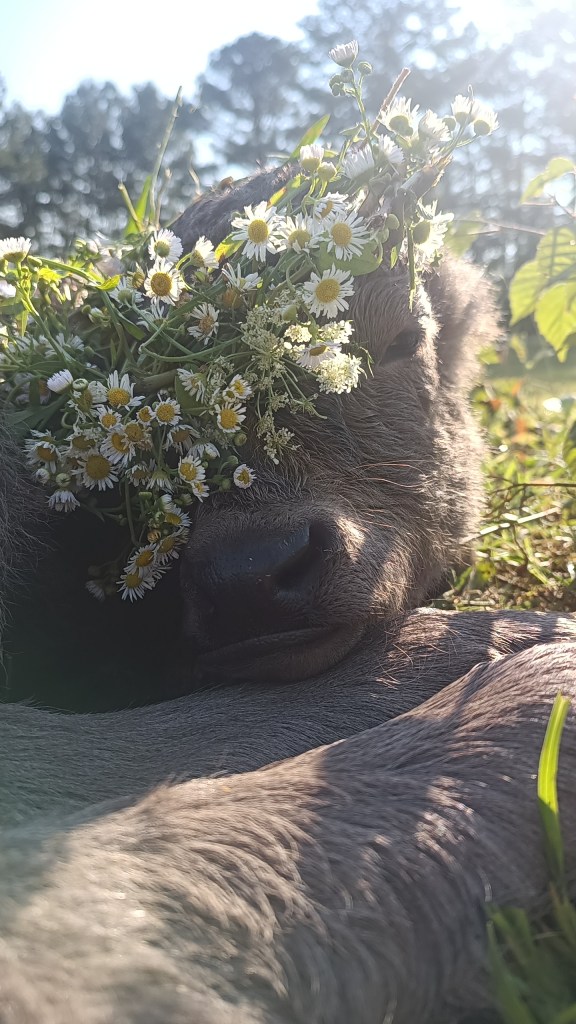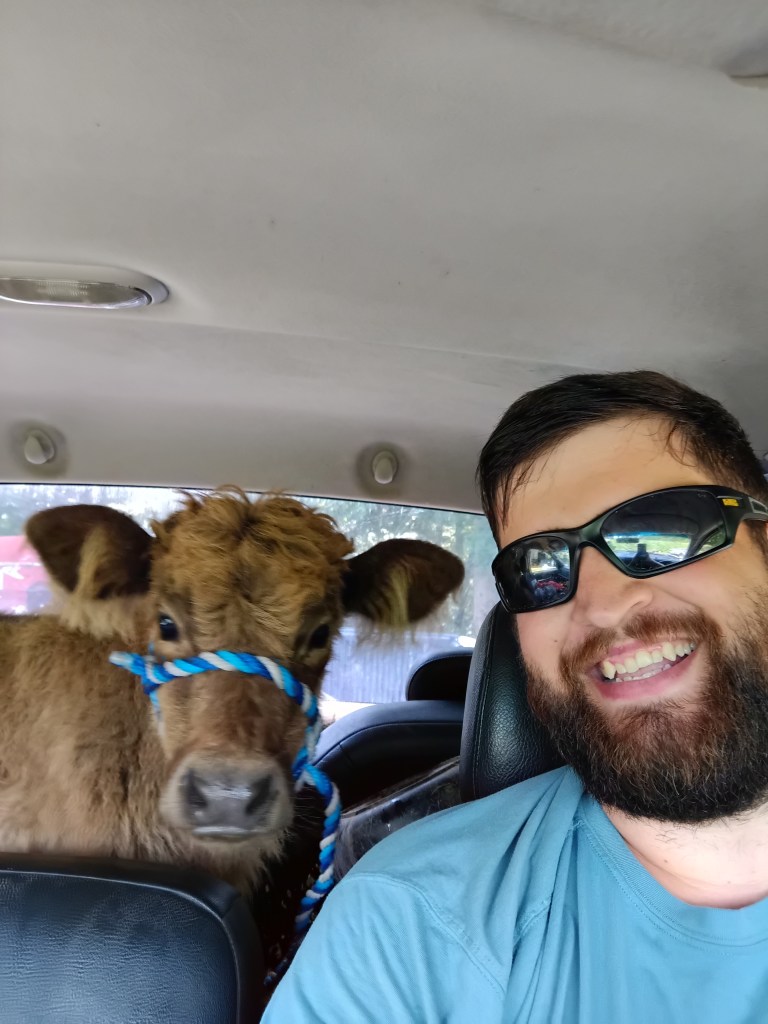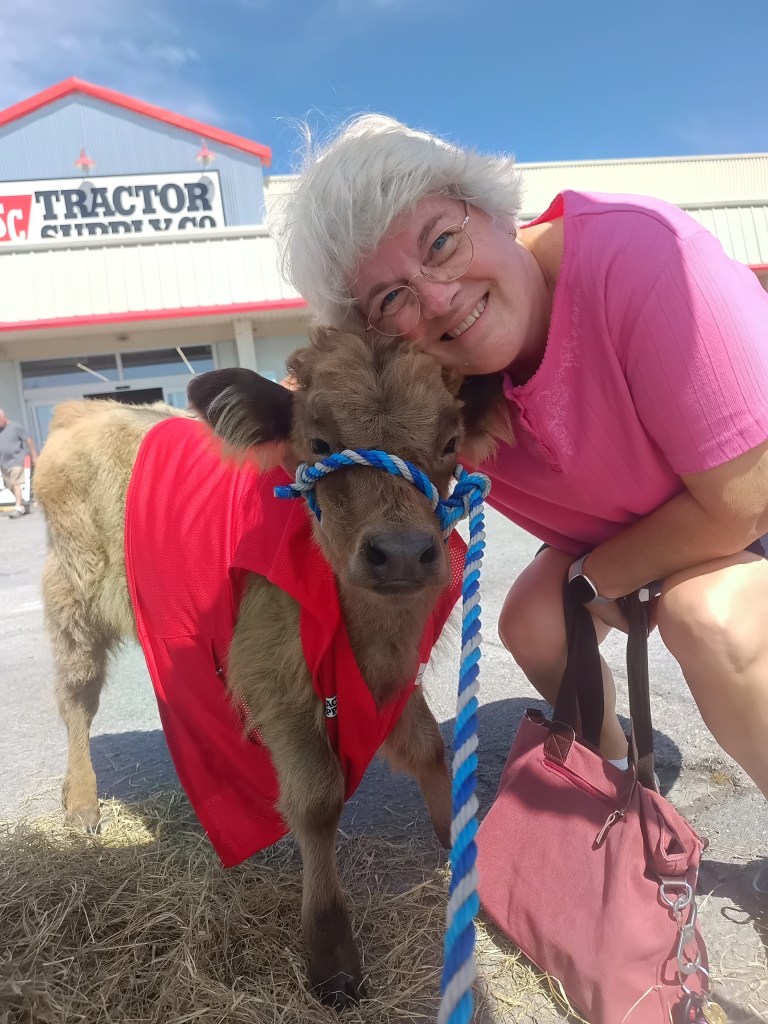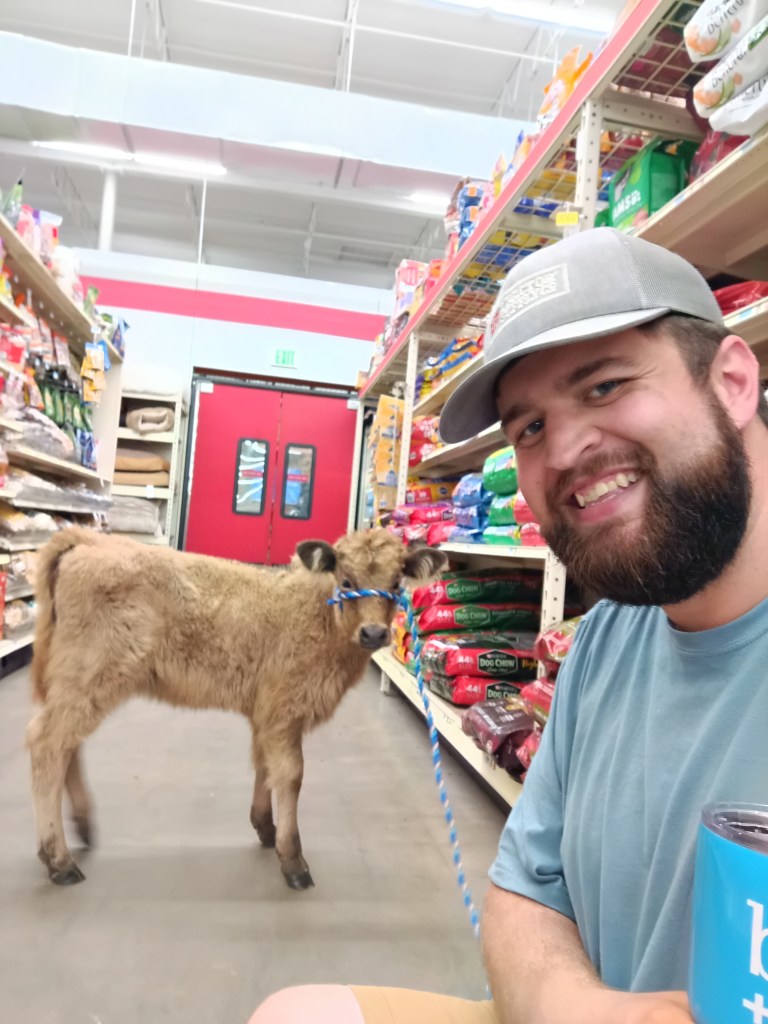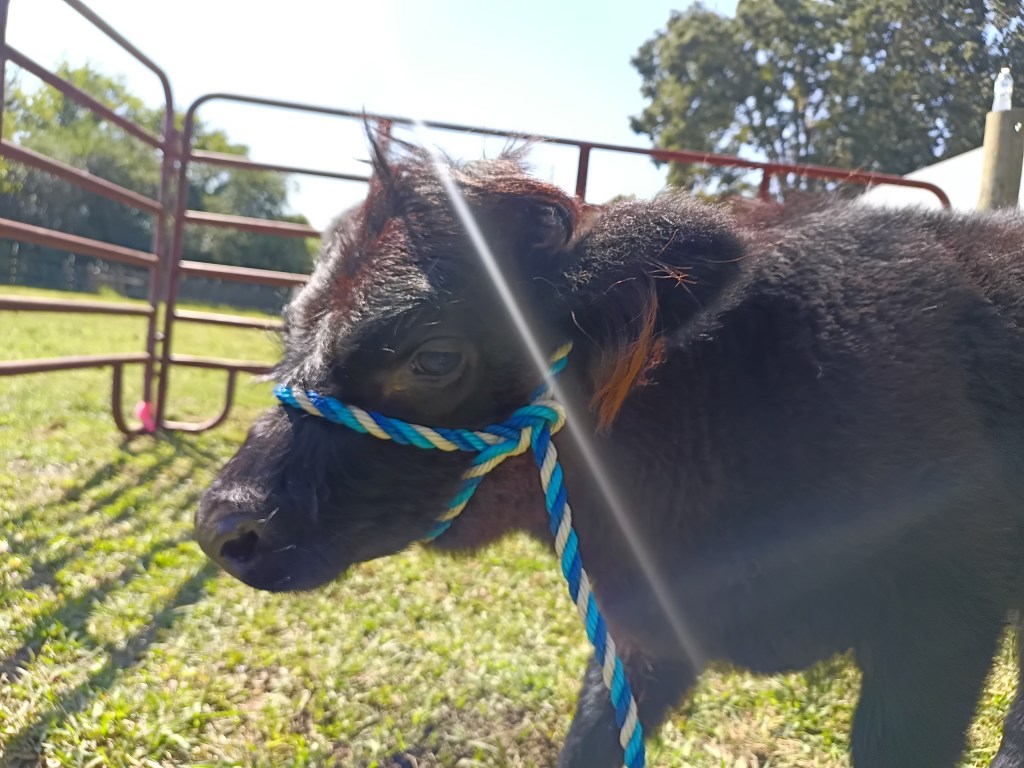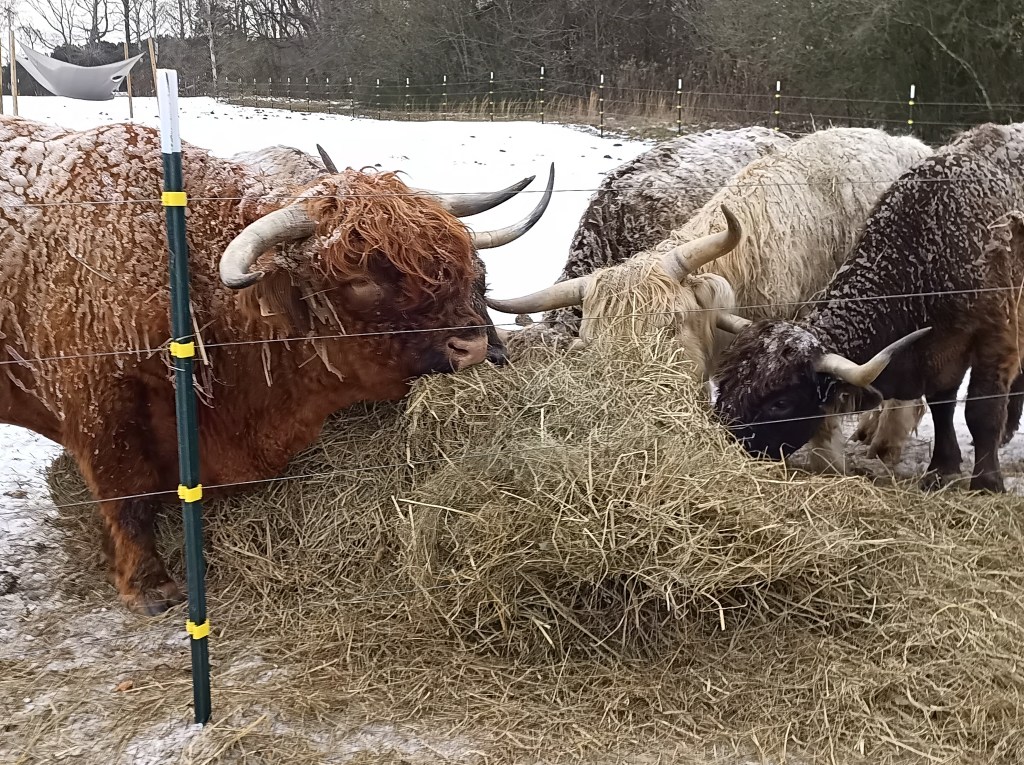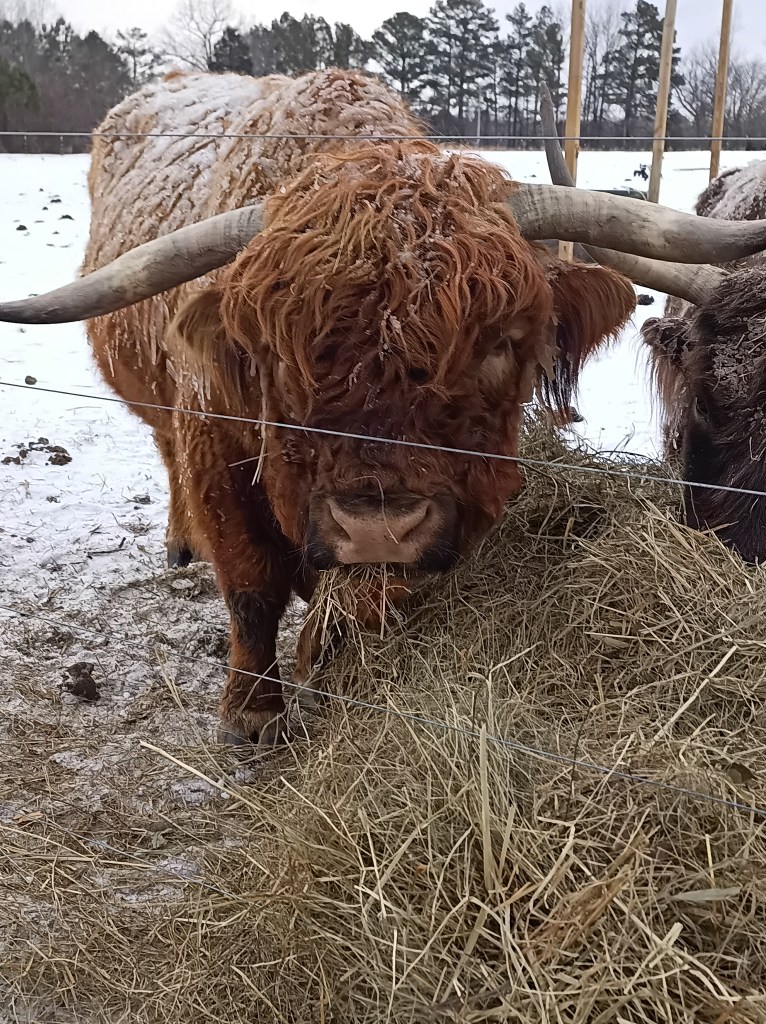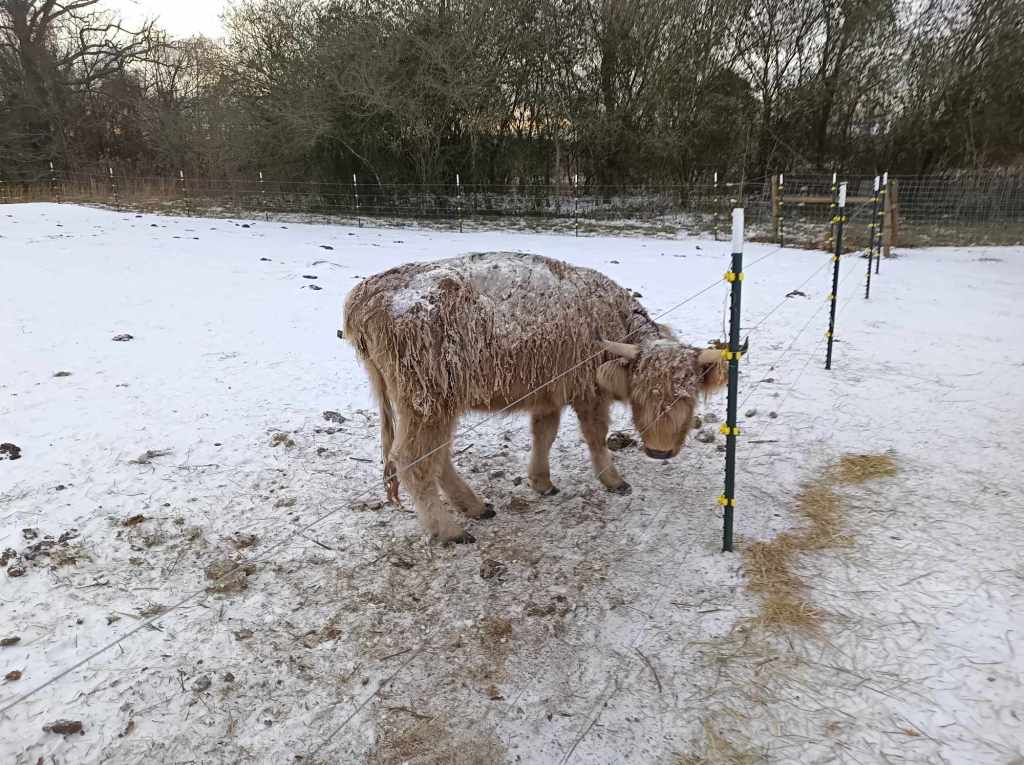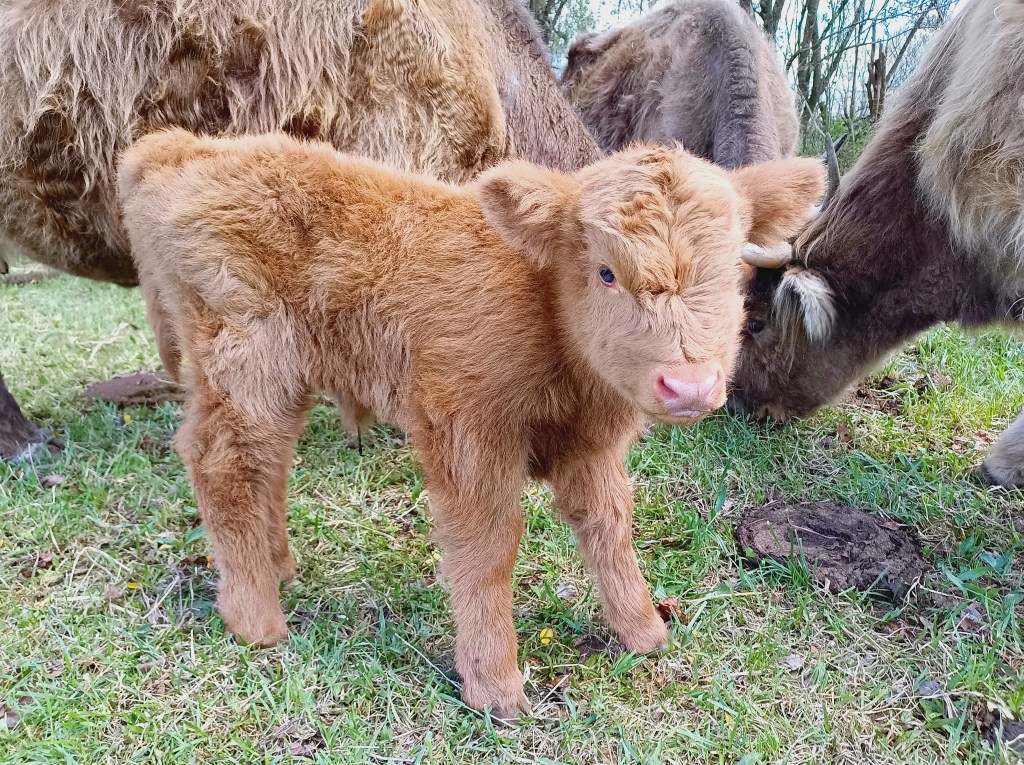
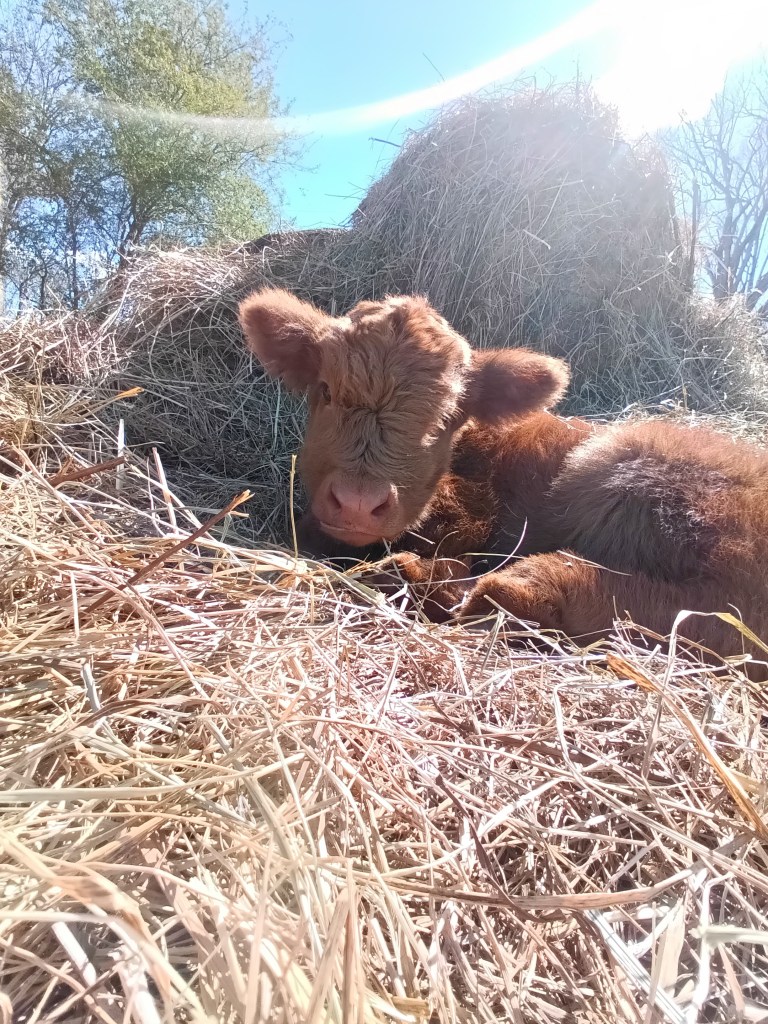
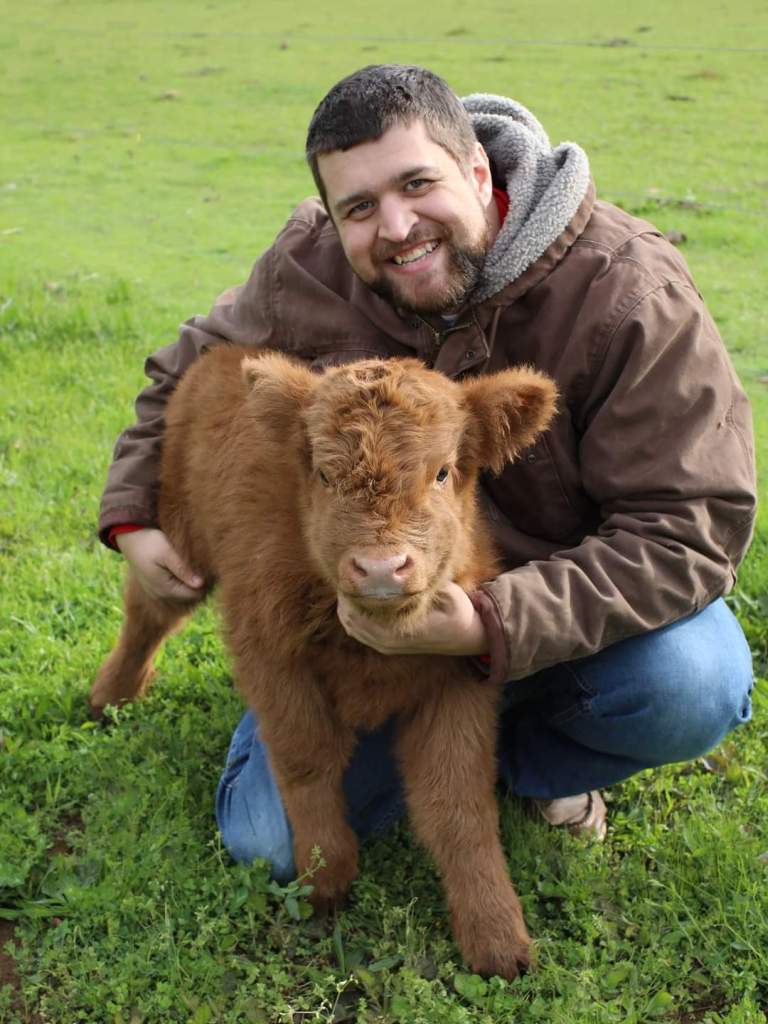
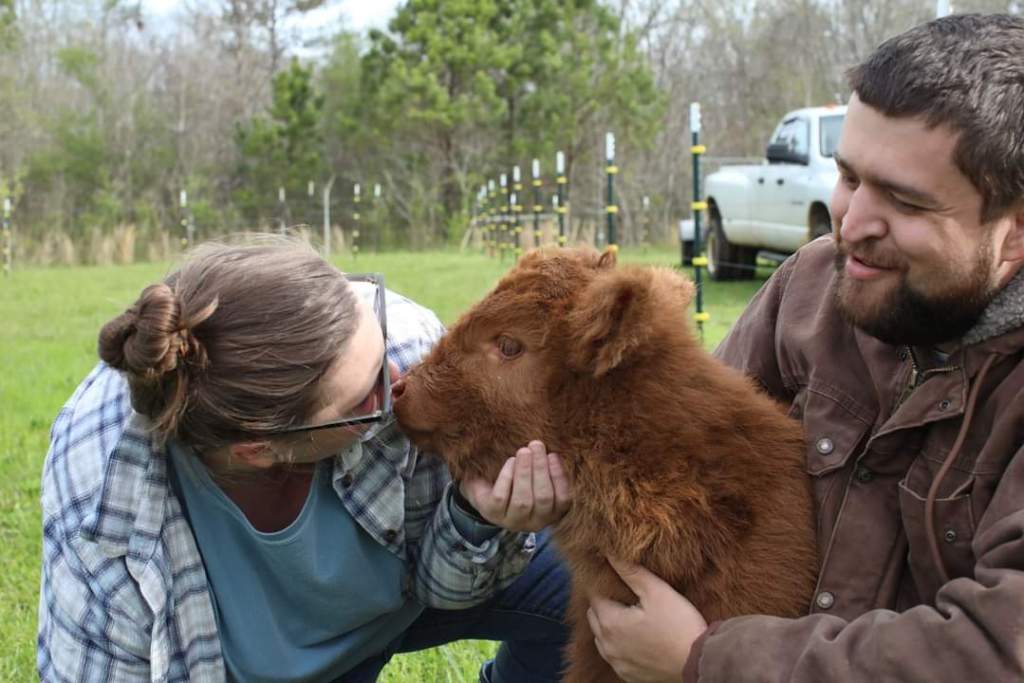
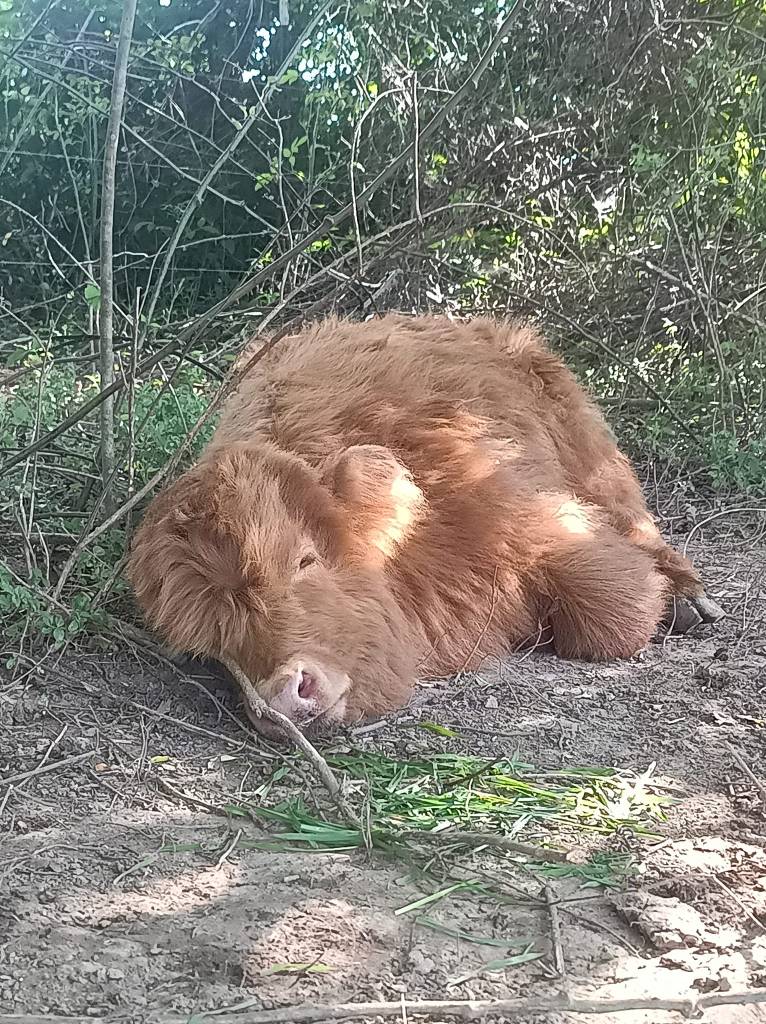
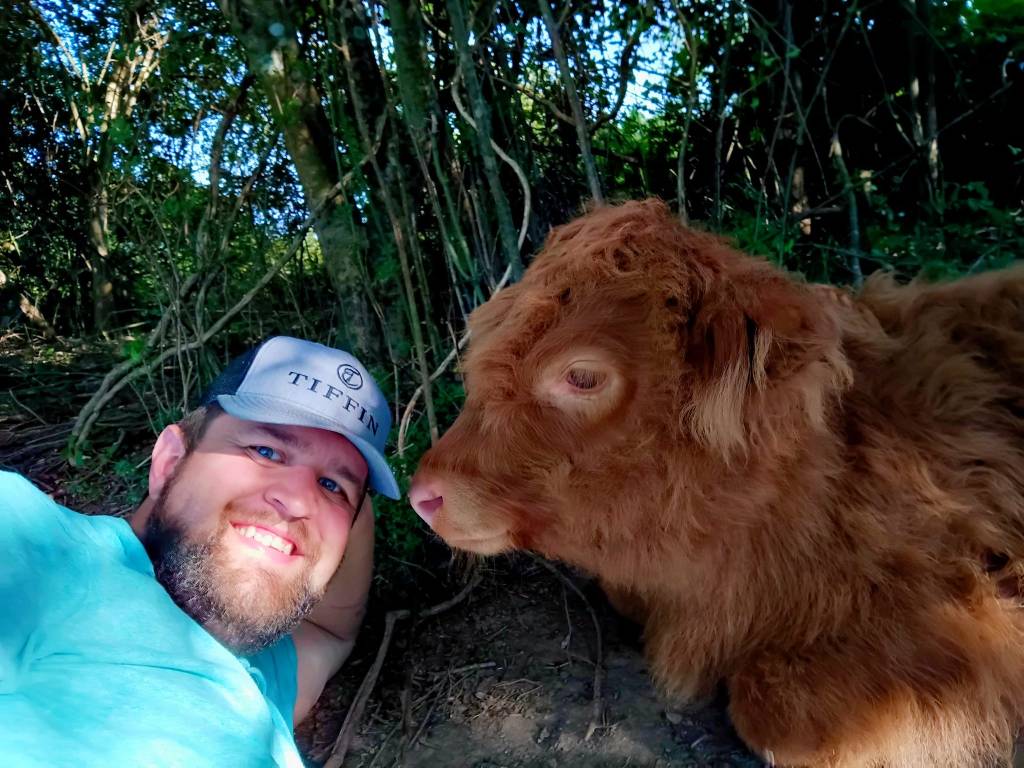
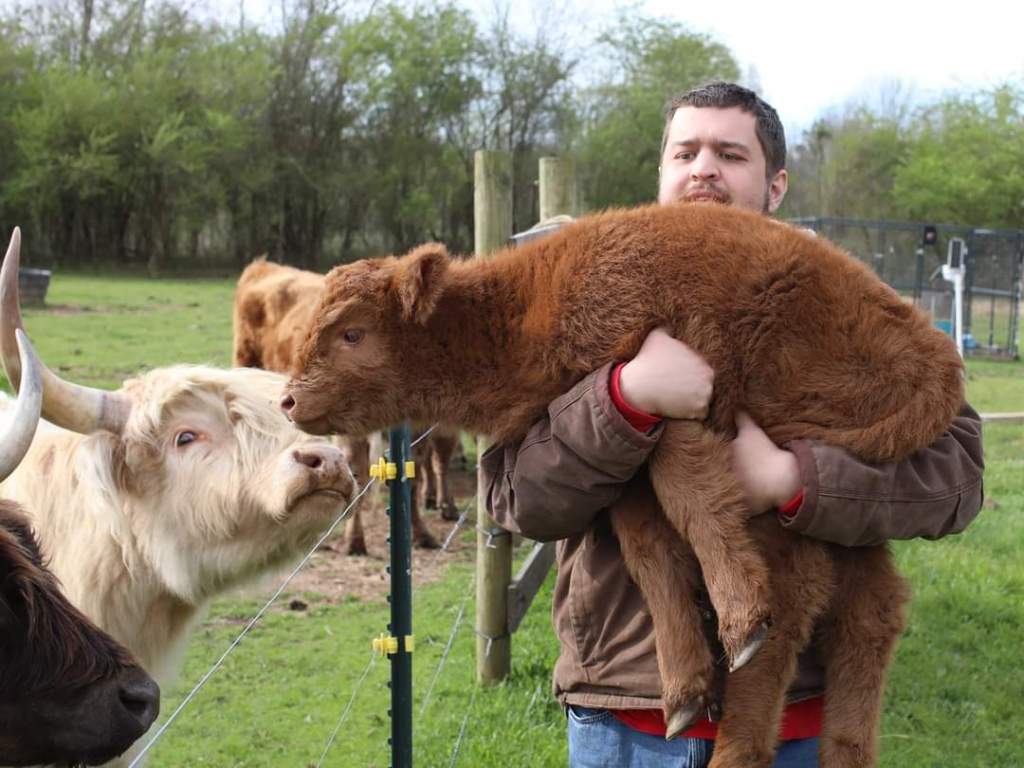
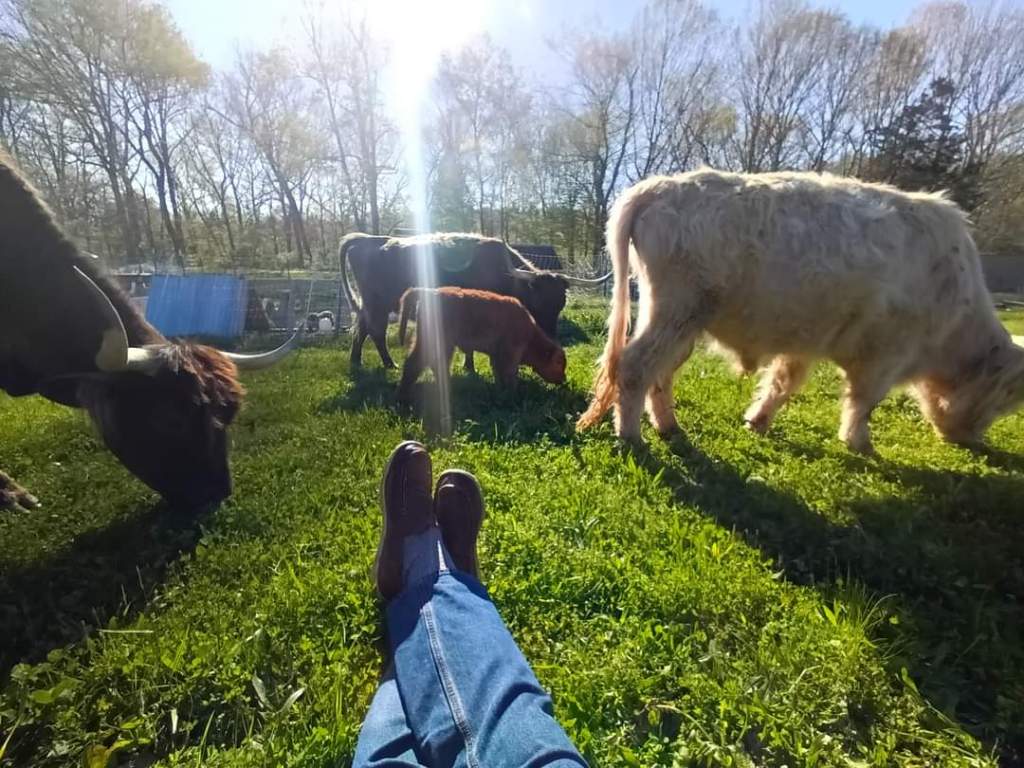
“April” – Red Highland Heifer Calf (AHCA)

STATUS: SOLD


Name: April
Birthdate: 4/1/2024
Color: Red
Gender: Heifer (Female)
Breed: Purebred Scottish Highland
Registration: American Highland Cattle Association (will be registered upon weaning)
Sire (Father): Fergus (aka “Adcock McCool 99 (D)”) (Click for AHCA Registration)
Dam (Mother): RBA Morgana (Click for AHCA Registration)
Favorite Treat: Wonder Classic White Bread
Favorite Scratch Spot: Shoulder at the base of her neck or under her chin on the side of her jawbone.
Price: $6,000 (50% Deposit, 50% On Pickup) – Transport Negotiable
Location: Russellville, Alabama
Available For Pickup: September 1st 2024 (SOLD)


Scottish Highland Fact: Purebred Scottish Highland cows are a “heritage” breed, which means that they have been bred over centuries for health, temperament, and intelligence. As a result, they are more docile and easier to manage than a breed like Angus, which has been bred for rapid weight gain and is known for poor health and temperament.


April is a very sweet and highly intelligent girl with outstanding breeding credentials.

Like her parents April is skeptical and slow to trust, but once you gain her trust she will trust you completely. She is docile and relaxed and loves playing with other animals her size. She has been completely mama-fed and mama-raised since birth and started eating grass less than two weeks after she was born. At the time of this post she is less than 4 months old and has already entirely herself weaned off of her mama’s milk.

Her diet has consisted entirely of fresh grass and high-quality minerals, with the exception of the occasional treat. She has tried numerous brands and types of bread and has recently decided that the only one she will eat is Wonder Classic White Bread slices. It absolutely must be Wonder Classic brand or she will spit it out on the ground and pierce your soul with a sharp look of betrayal.

Based on her body frame and hair type, I expect her to grow up looking almost identical to her sire, Fergus.


Scottish Highland Fact: Scottish Highland cows are extremely docile and friendly. As long as they trust you, feel safe, and have adequate food, shade, and water, they won’t try to break out of your fence or leave your property like commercial beef cattle breeds.


Parents
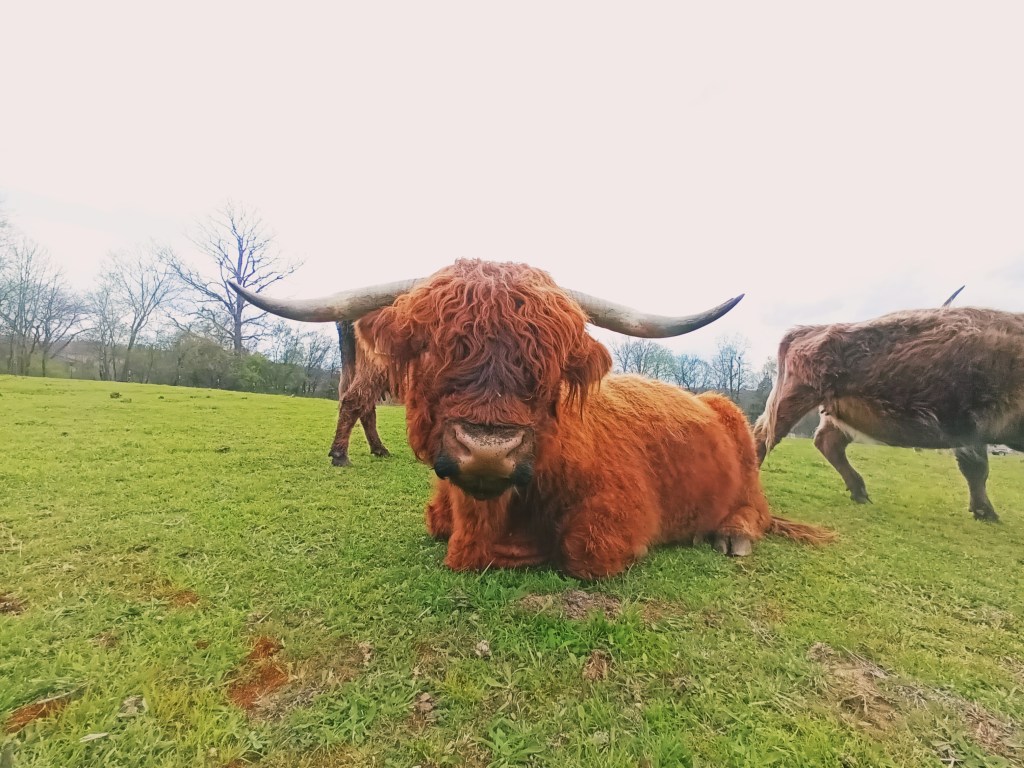
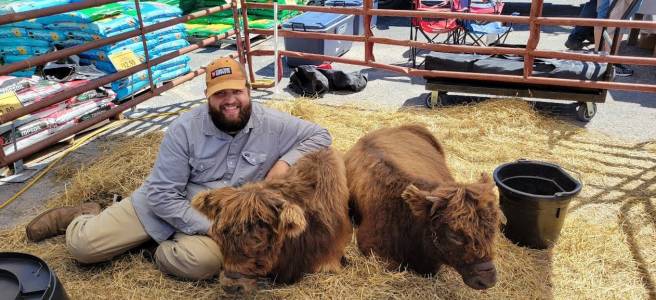
April’s sire (father) Fergus is an 8-year-old large red bull with championship bloodlines and a classic old-school Highland frame. Fergus is the herd sire here at Middle Fork Farms, meaning he has seniority among the bulls. He is extremely mature and restrained – he will never start a fight. If challenged, he easily puts other animals in their place without harming them.

April’s dam (mother) Morgana is a 6-year-old mid-sized dun cow with a traditional frame. She has very predictable pregnancies and easily births babies of relatively large birth weight. She is an excellent mother and will protect, hide, and provide for her babies better than any other animal on my farm. Like Fergus, she is an extremely mature and calm animal. Morgana is very skeptical and slow to trust but once she decides to trust you she is extremely loyal.

Morgana has allowed me to interact with April from the moment she was born, even while she was being milked by her. She welcomed my presence at April’s birth and even encouraged me to help her clean April up afterwards. In fact, you can watch a recording of April’s entire birth here (click to open in a new tab).


Scottish Highland Fact: Despite popular use of the term, there is no such thing as a “Miniature Highland Cow.” Scottish Highland cattle are simply shorter than most beef breeds because they have been bred for health and hardiness rather than size. Most “Miniature Highlands” advertised for high prices online are mixed with a Dexter in order to give them a genetic disorder called Chondrodysplasia (medical dwarfism). Despite fetching sky-high prices online from uneducated buyers and being very popular as calves for cute photoshoots, these cows will suffer from a variety of health issues as soon as they hit adulthood and will live a fraction as long as a healthy cow.

Intentionally breeding genetic traits that negatively affect an anima’s health is unethical and will never be done on our farm.


Training
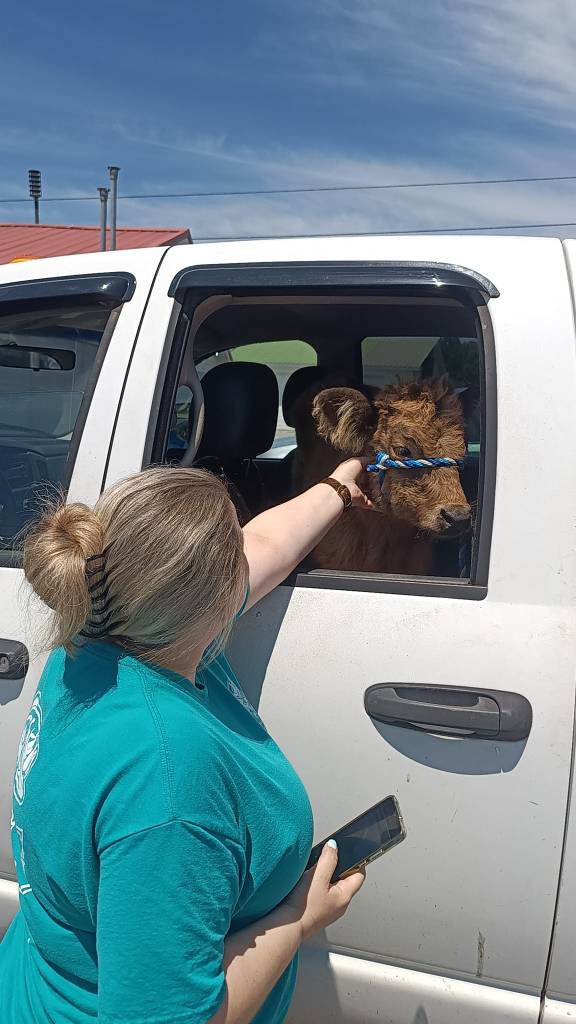
We sell fully-trained Highland calves that are perfect for homesteads and farms of all sizes!

Our training program ensures that our calves are safe around kids and other animals, and it also makes them much easier to own and manage. My entire herd is trained to a single strand of yellow rope. I often open the main gate so they can come into my front yard and mow my grass, then go back inside their pasture.


Scottish Highland Fact: Scottish Highland cows love to eat brush, trees, and many grasses and weeds that other cattle breeds will not eat. They are commonly used as working animals on homesteads and are used for clearing brush and keeping trees trimmed.


To complete their training, all calves MUST meet the following criteria:

  1. Will allow themselves to be haltered.
  2. Will follow you on a lead without needing to be pulled.
  3. Does not show any aggression at all to humans or other animals, especially during training.
  4. Will approach you and let you interact with them when you have a treat.
  5. Will not attempt to cross a single yellow strand of polywire.

We will not sell a calf as a pet or breeding stock that does not meet all of the above criteria.


Scottish Highland Fact: Scottish Highland Cows have an average lifespan of 15-22 years and will birth an average of 12 calves during their lifetime – compared to an average natural lifespan of only 10-12 years and 5 calves for beef breeds like Black Angus. This is one of the main reasons registered Highlands are so expensive – it’s all about the return on your investment!


Most of our calves have been successfully trained to an even higher standard. Based on April’s temperament and how her training has gone so far, I expect her to meet our higher standards as well:

  1. Does not resist being haltered at all
  2. Will not attempt to remove a halter if left on for an entire day
  3. Will approach you and let you interact with them based solely on a desire for affection, NOT a treat.
  4. Will walk the entire perimeter of my 3-acre training pasture on a lead that I am holding onto with only two fingers.
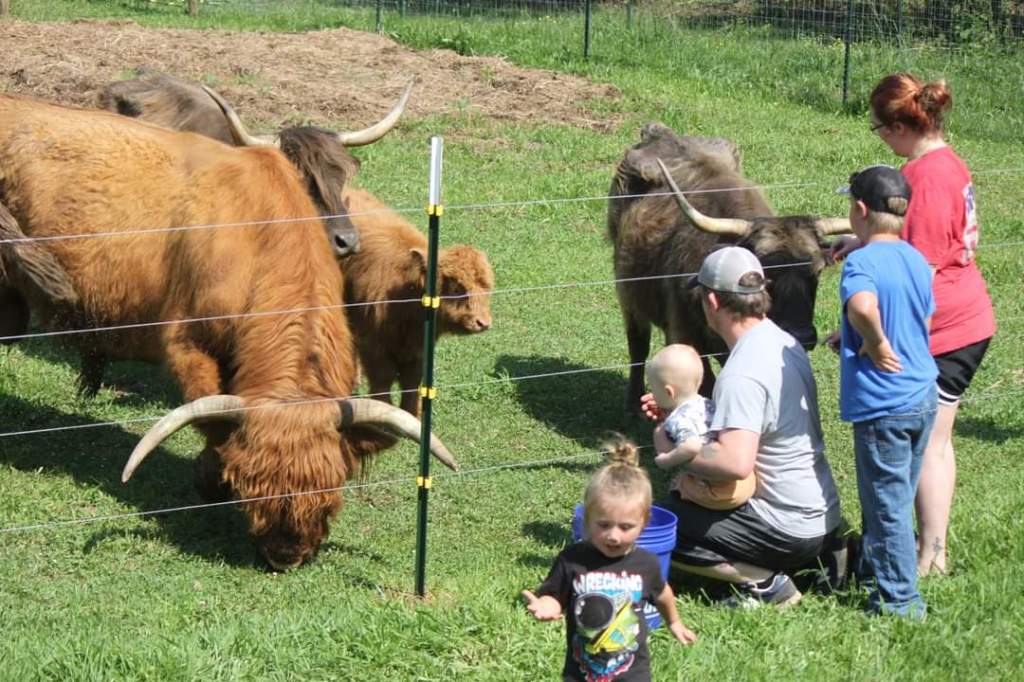
  5. Has safely completed at least two 2+hour events where they interacted with the general public and small children.

Most training takes place in the same open pasture that both parents live in, with them having full access to me and the baby at all times. This allows for trust to be built very early on, as the calf sees their parents be completely okay with me handling them. I have handled three of Morgana’s babies now and she trusts me completely, which really helped me build trust with April.

My philosophy is that if mama doesn’t think I should be doing something, I shouldn’t be doing it. Highland cows are extremely intelligent and have a well-deserved reputation for being excellent mothers – protective and nurturing but also relying heavily on their larger family to help raise the calves – including any humans they consider part of the herd. It’s very common for my mamas to bring me their calves to babysit while I’m out working in the pasture so they can take a break and go eat some grass without being constantly pestered.


Scottish Highland Fact: The American Highland Cattle Association (AHCA) is the premiere organization for purebred Highland cattle. They have the strictest registration standards possible. To register a Highland cow with the AHCA, both parents must already be registered with the AHCA. Additionally, all bulls are required to be DNA tested by an AHCA-approved laboratory in order to verify their lineage before they will be accepted to the registry.

Interested in learning more about Scottish Highland cattle? Check out this article!


Purchasing Information


Scottish Highland Fact: Scams are very common in the Scottish Highland market, especially online. The most common scam is to market an animal online using stolen photos, take your deposit, and then stop responding to you. Never buy an animal without meeting them in person before paying a deposit. If you can’t visit them in person, you can ask the seller for a customized video of the animal that includes the seller’s face saying your name and the name of the animal and the date the video is taken. All reputable breeders are happy to do this for you and anyone who refuses should be considered a scammer.


If you are interested in previewing or purchasing April, please reach out to us at middleforkfarmsal@gmail.com or text/call us at 256-856-928.

You are welcome and encouraged to visit our farm and meet our animals anytime! Use the contact information above to schedule a visit. If you are unable to visit, I can record and send customized videos of any animal you are interested in.

All calves sold by us were born right here on our farm to our AHCA-registered cows.

Animals listed for sale are ONLY delisted AFTER a 50% deposit is IN-HAND. Animals with a deposit paid must be picked up within two weeks of the deposit being received OR within two weeks of weaning, whichever is later.

Local transport (in-state & within 120 miles) is free and non-local transport options are available for additional cost.

Calves are not vaccinated, but we are happy to vaccinate or have any tests done that you’d like, at your cost, at any point before they are picked up.

We screen buyers and will not sell to just anyone. Before selling you an animal, we will ask questions to make sure that you will be taking them to a healthy environment that provides sufficient safety, shelter, food, water, and companionship. We reserve the right to refuse to sell any animal to any person for any reason.

That being said, we love working with first-time cow owners and are happy to spend as much time as needed answering your questions and helping you prepare your place for a fluffy friend. We are also happy to help you vet other Highland breeders if you want more than we have available.

Trey Edwards
Owner, Middle Fork Farms
Professional Fluffy Cow Snuggler
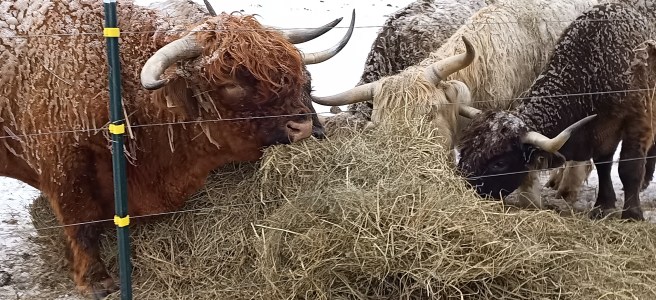

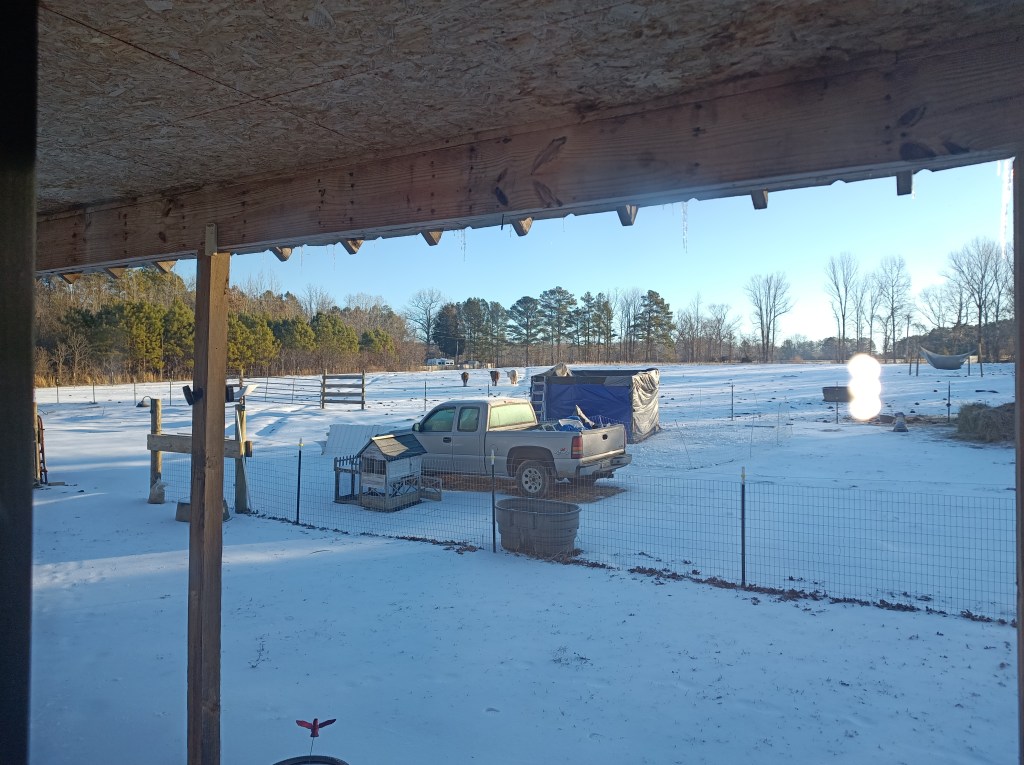
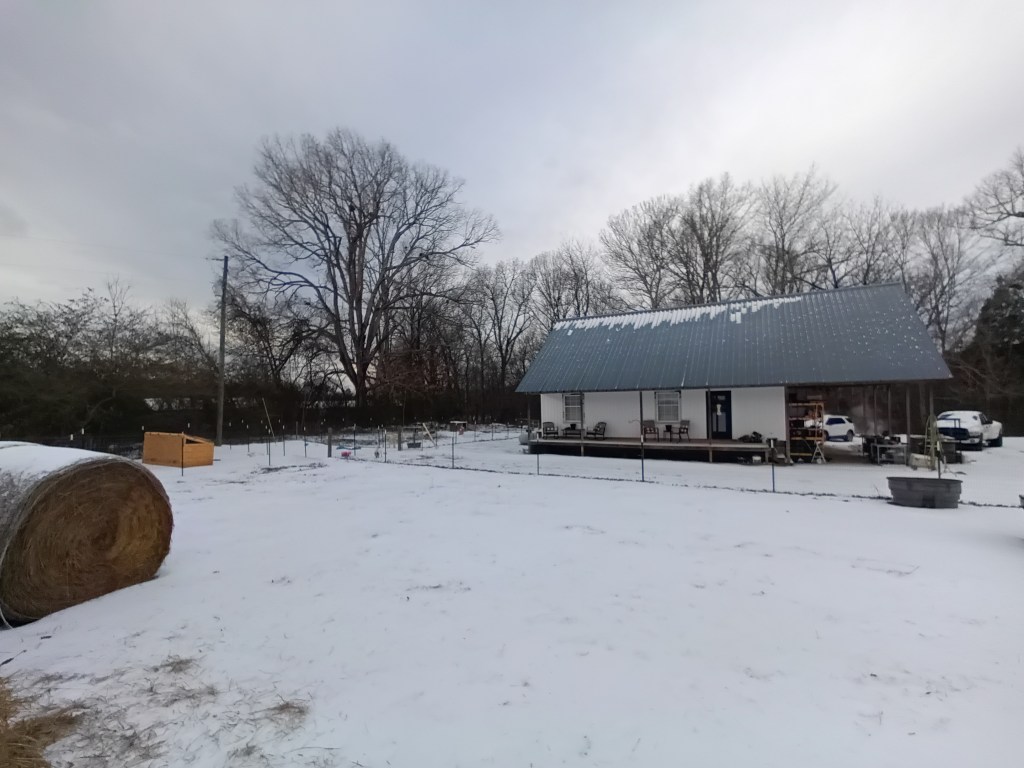
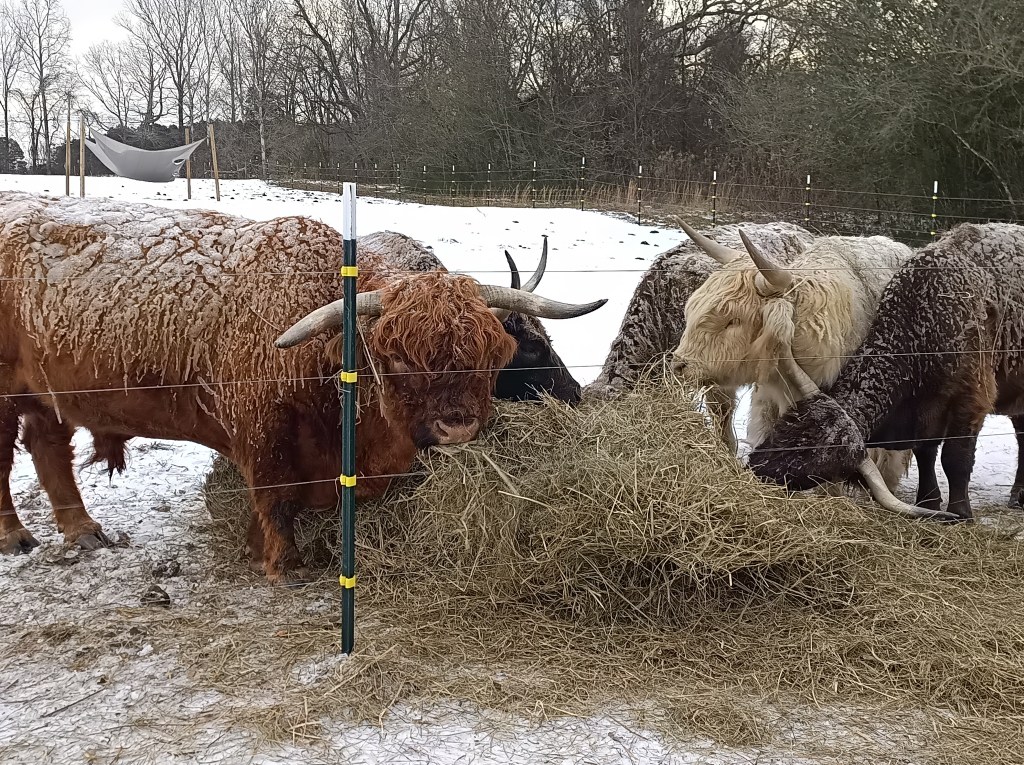
This Sucks. (Icepocalyse 2024)

Just popping in to vent for a minute… this is, by far, the worst weather I’ve ever experienced. Three days in and I still can’t even feed the chickens without falling flat on my face on SIX SOLID INCHES of slick ice despite using two fence posts as walking sticks.

My farm stays 4-8 degrees cooler than the rest of the county year-round due to our low spot right by the lake. It also gets more moisture. So, I don’t know if everyone’s place is as bad as mine but I am just hoping and praying that we get enough melted tomorrow for me to be able to get to the road, because right now it’s an 800ft uphill climb on solid slick ice that my 1800lb bull doesn’t even dent when he walks across it. If I can’t get to the grocery store tomorrow I’m gonna be eating a lot of chicken eggs for a few days.

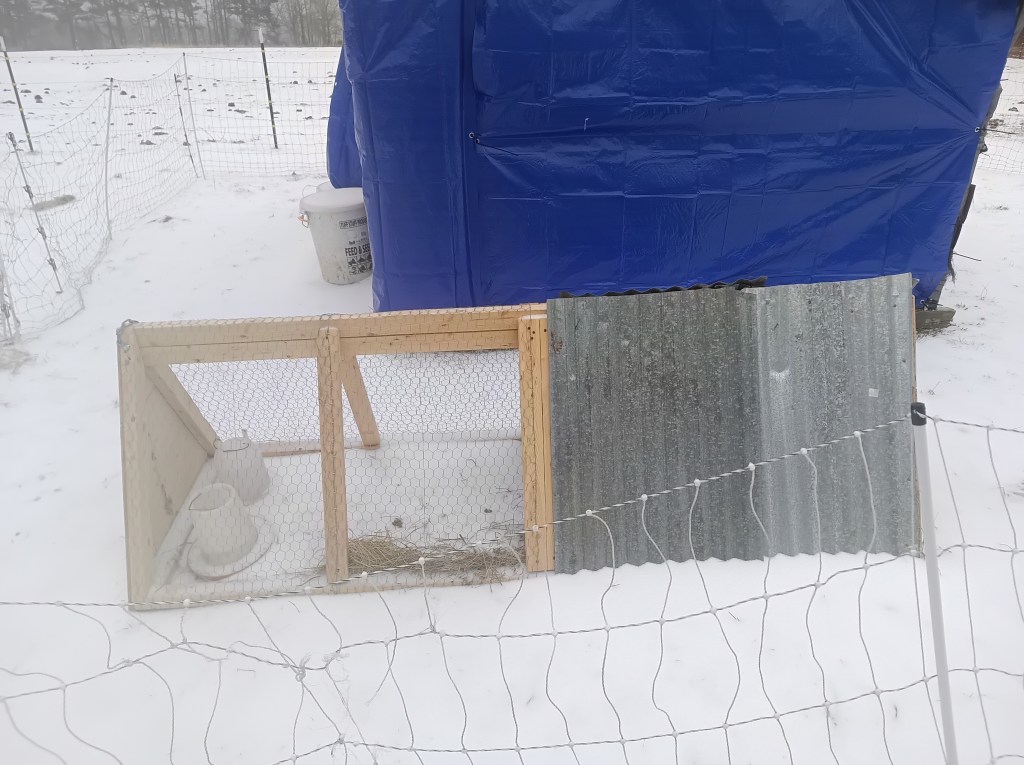
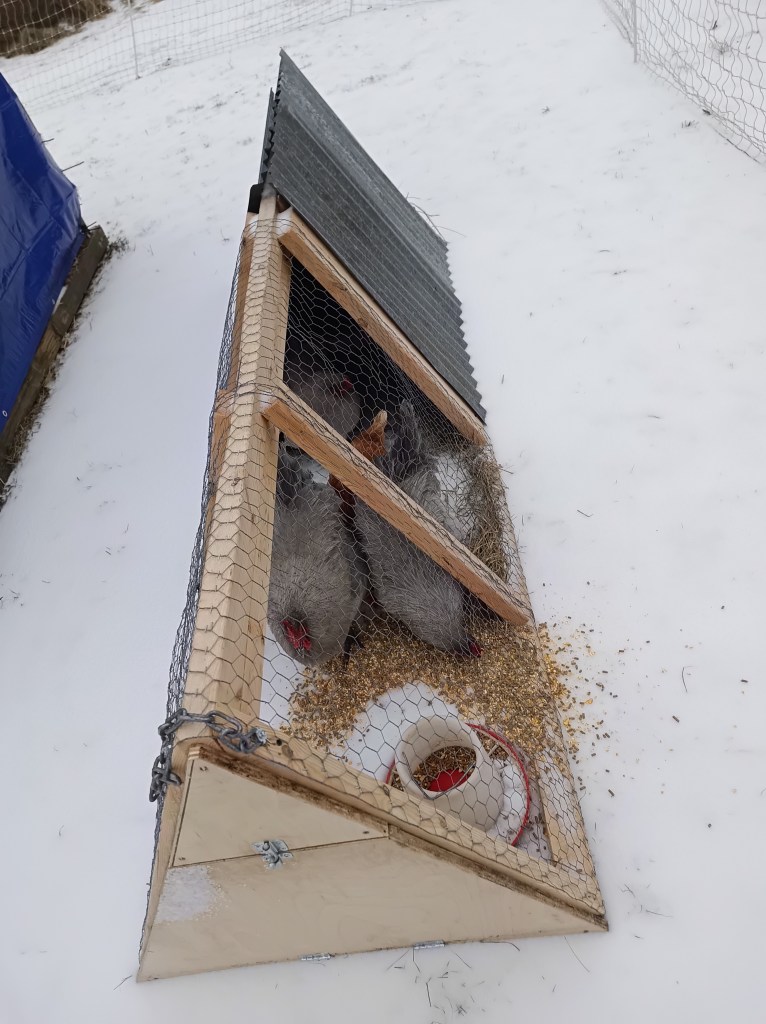
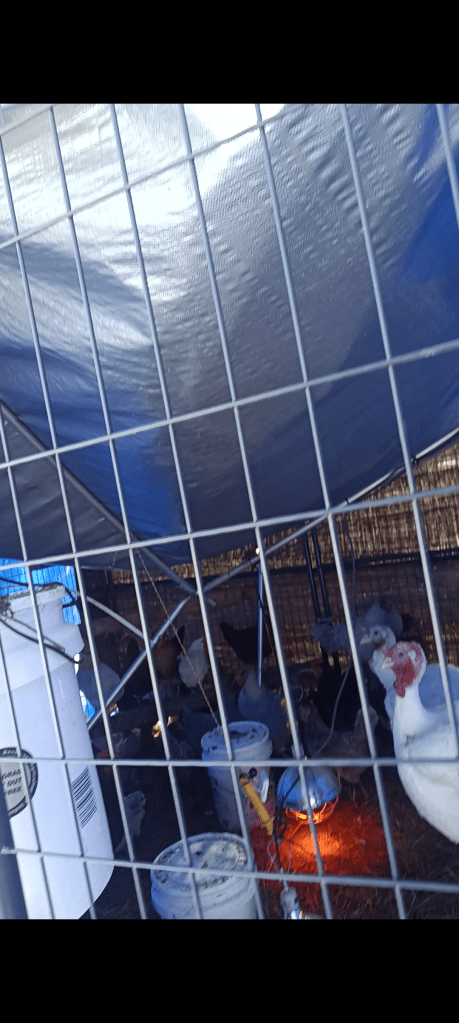
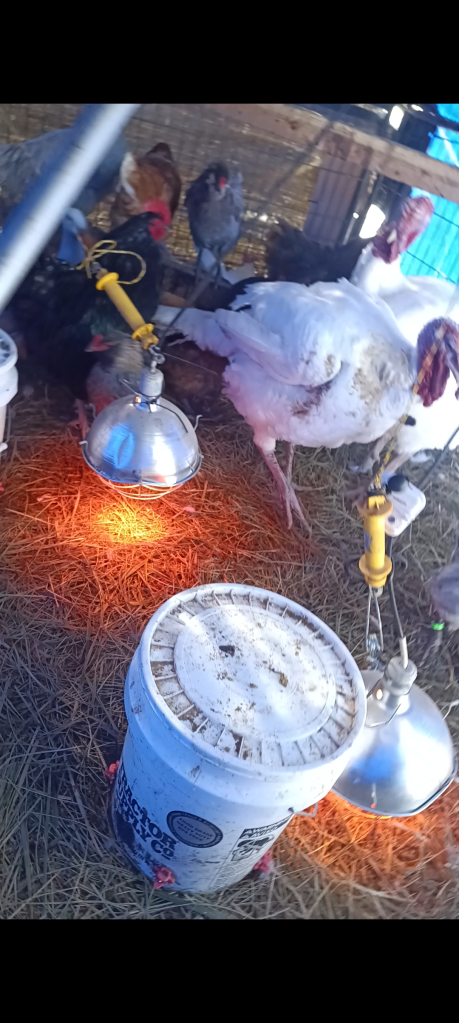
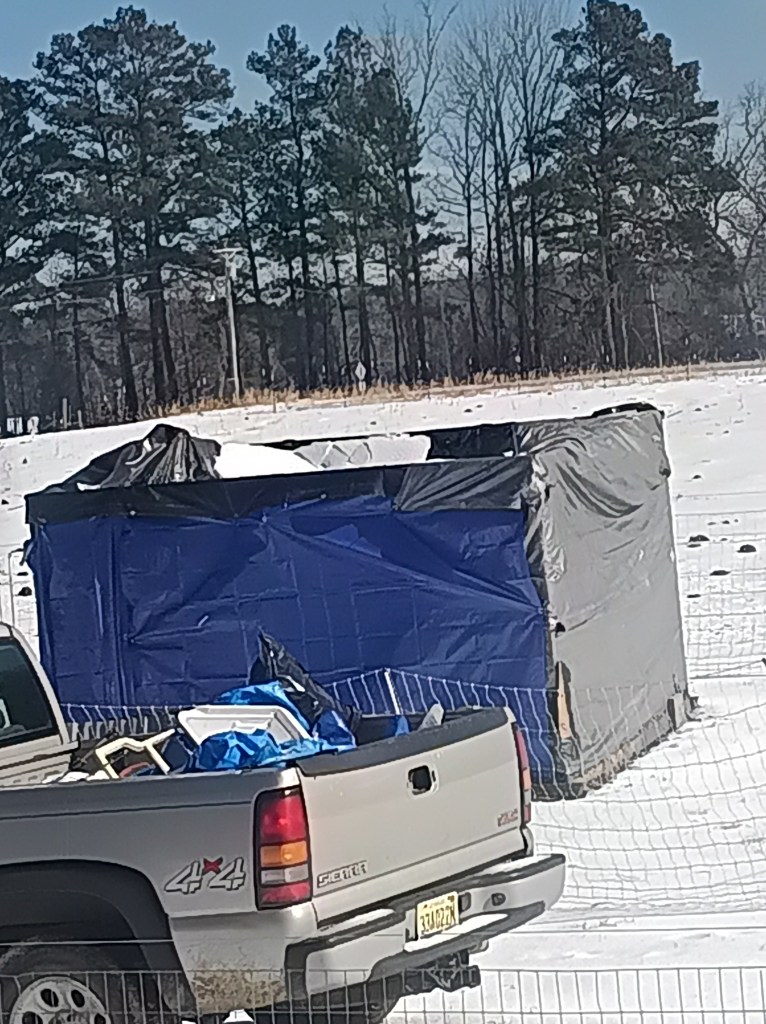
All of the animals are alive so far, but we’ve had some close calls. Our main coop, which has around 40 mixed chickens, ducks, and turkeys crammed in it right now, is wrapped on all sides with tarps, has six inches of dry hay, and two heat lamps – it’s still 24 degrees in there and their water is frozen solid. I have two smaller breeding coops but had to abandon them yesterday when I checked on their tenants and realized they were very lethargic.
Yesterday, the coop roof caved in when the 2-3 inches of ice on top of it shifted. If I hadn’t been sitting by my living room window when it happened we probably would have lost all of our birds in the resulting fire. I was able to quickly run out there and pull the heat lamps off of the dry hay floor. I am very thankful that I shelled out for a good ladder two years ago with adjustable legs and extra grippy feet, otherwise I wouldn’t have been able to get the ice off.

As it was, I still slipped and fell at least half a dozen times – once on my face. I’ve pulled muscles I didn’t even know I had. I’m using a full-sized pickaxe to bash a 2ft by 2ft hole through 6-8 inches of solid ice in my cattle trough once a day so the cows can drink for 5-10 minutes before it re-freezes. Thankfully we stockpiled enough hay this year to last us the entire winter, so their food hasn’t been an issue.

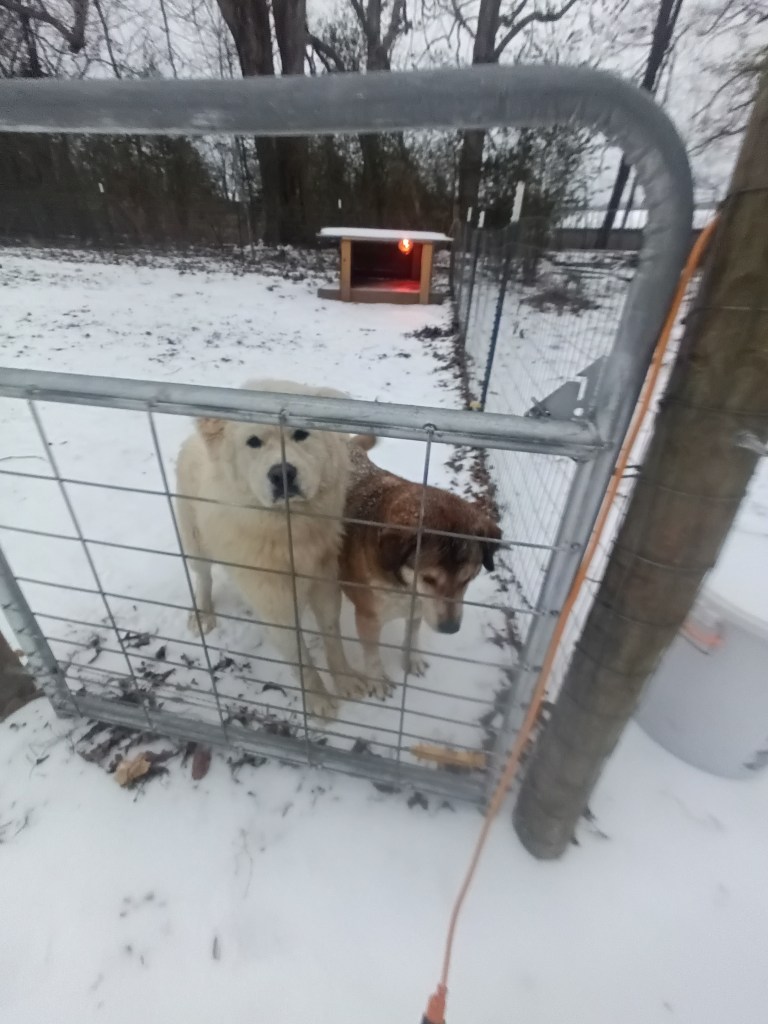
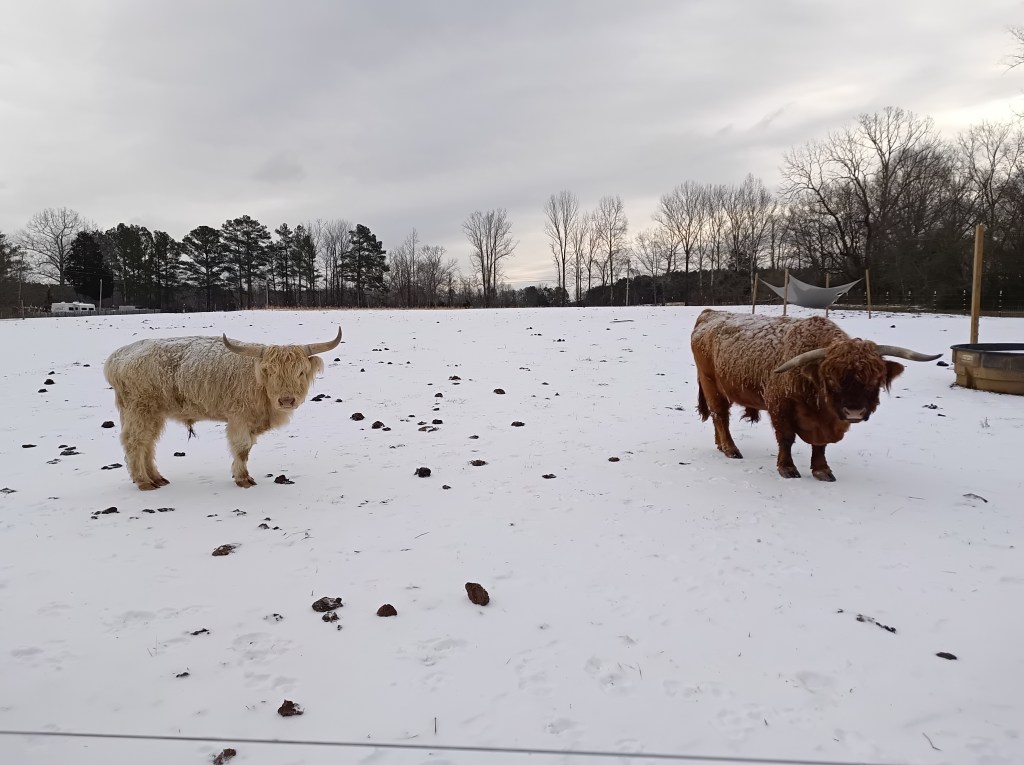
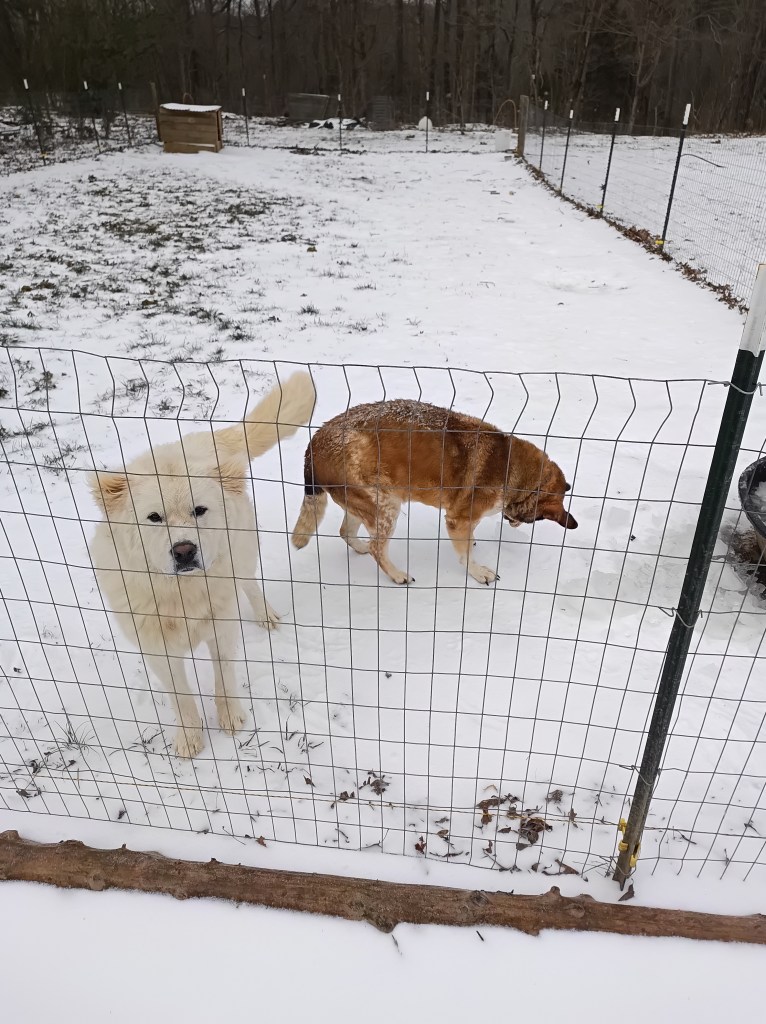
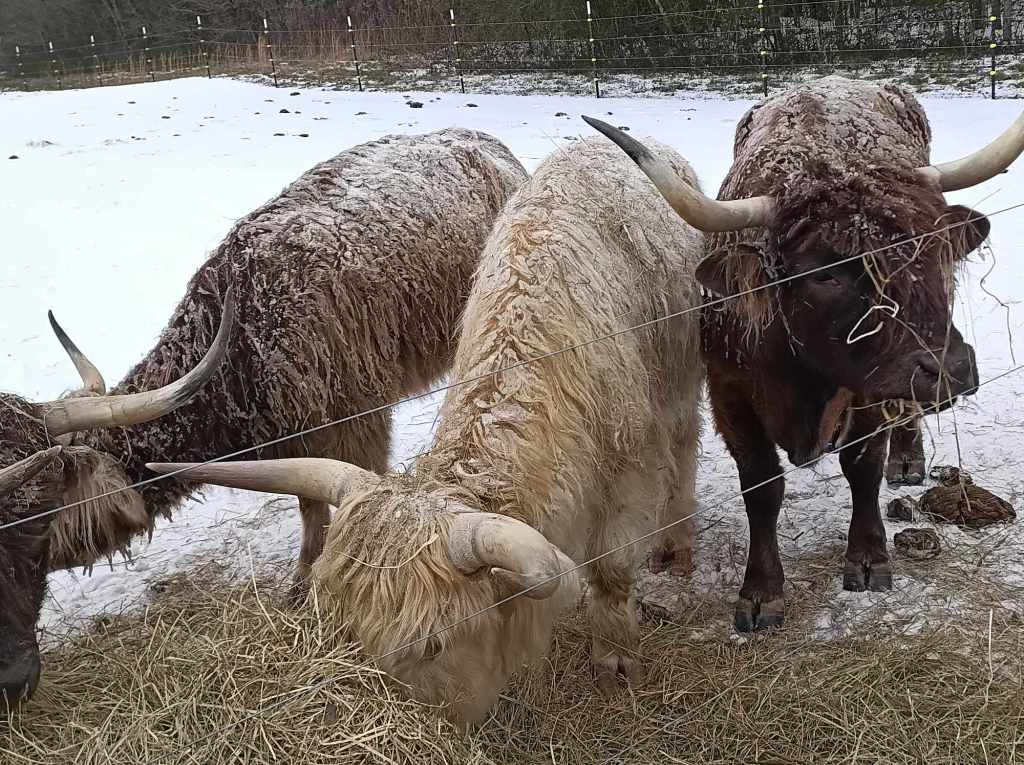
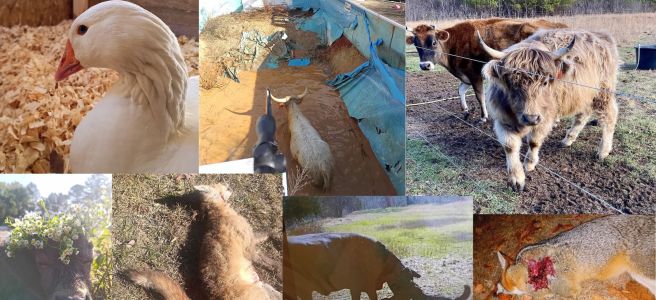
The dogs and pigs are loving it and are outside playing all day, they won’t go in their houses. The cows love cold weather but hate being covered in 12-inch-long icicles. The birds have no idea what’s going on and are just confused. The geese are angry at being stuck in a small coop, and just hiss at me anytime I check their food and water. Given what I’m going through to make sure they get fed, you’d think they’d be a bit more grateful.

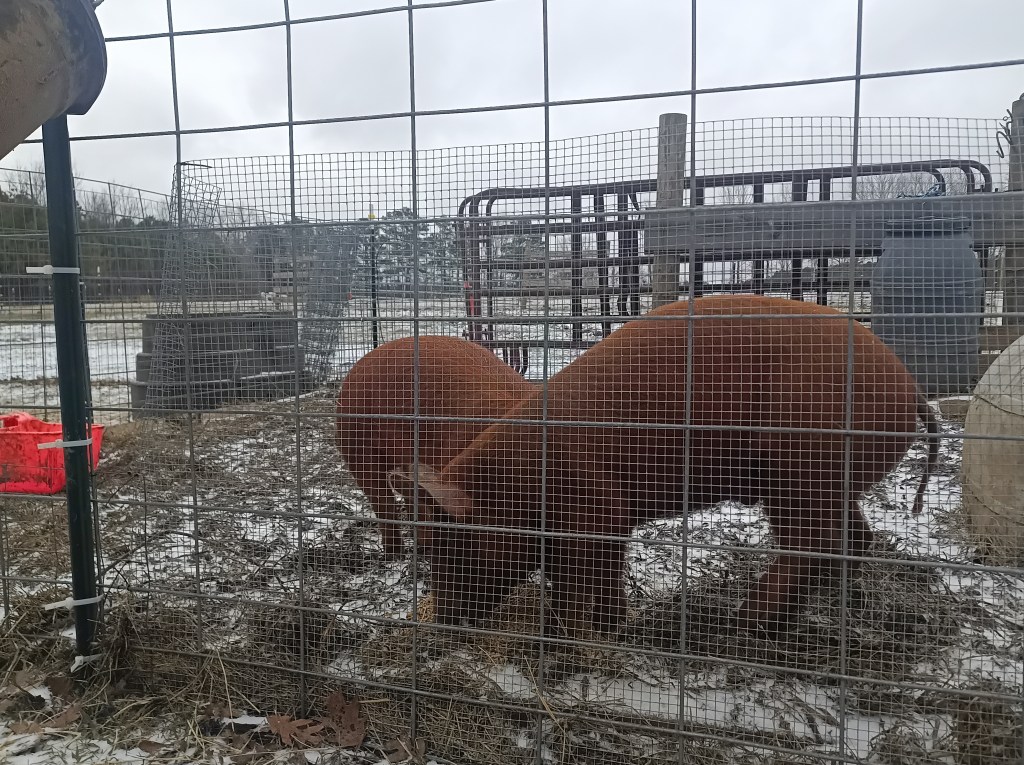
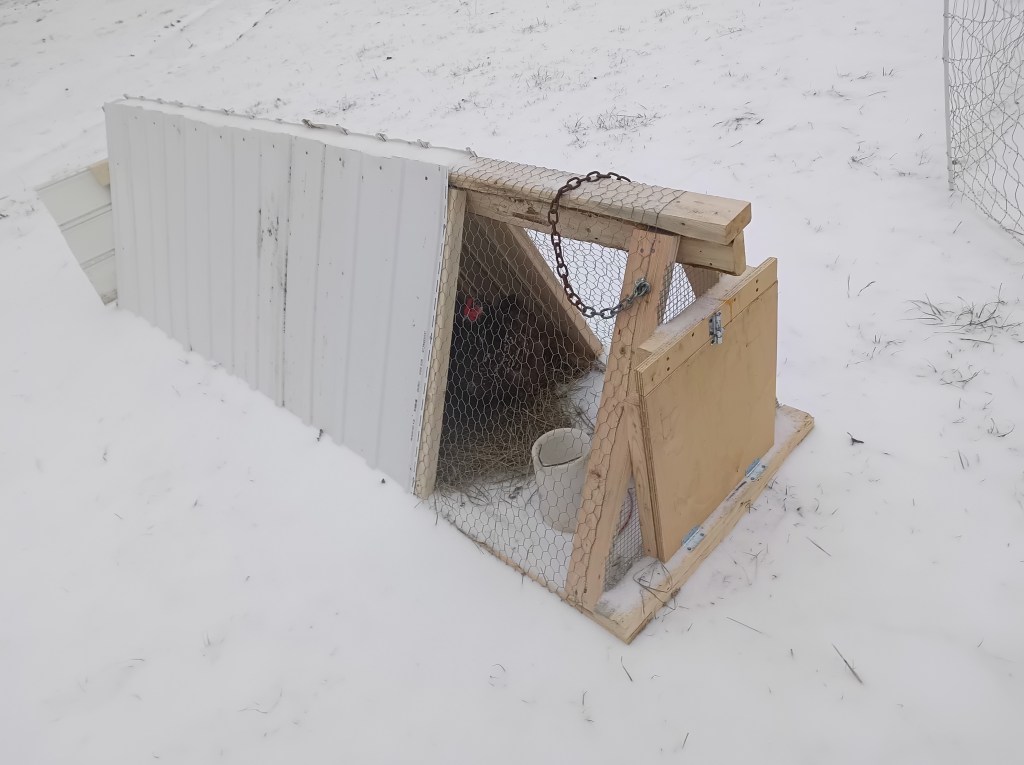
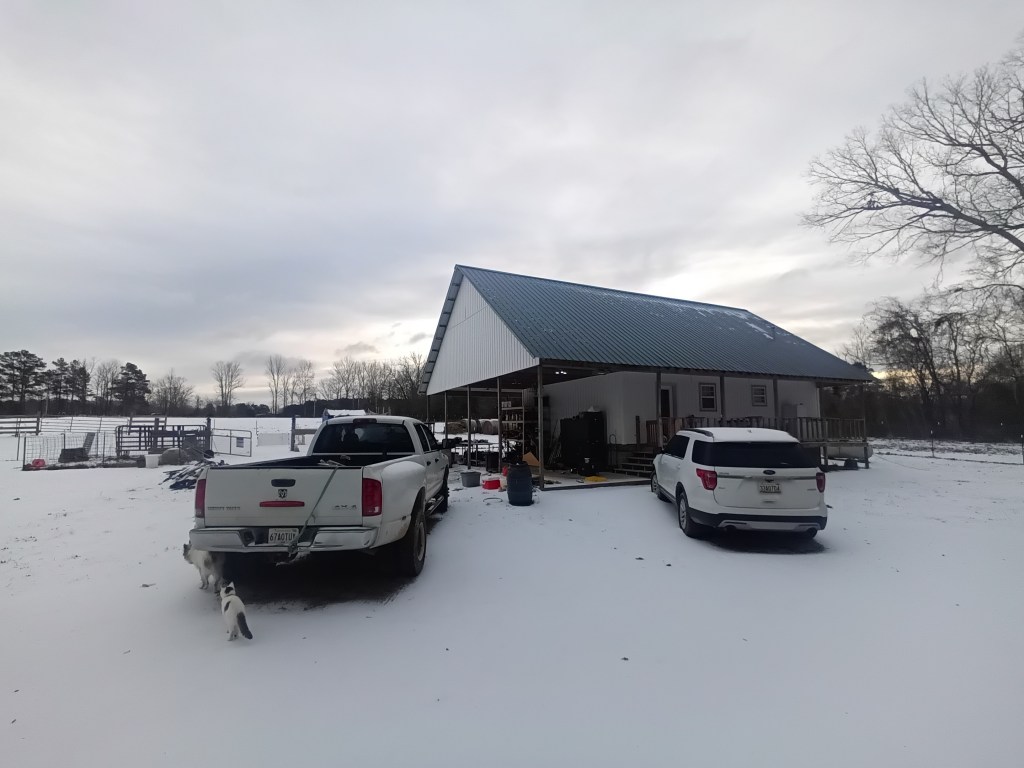
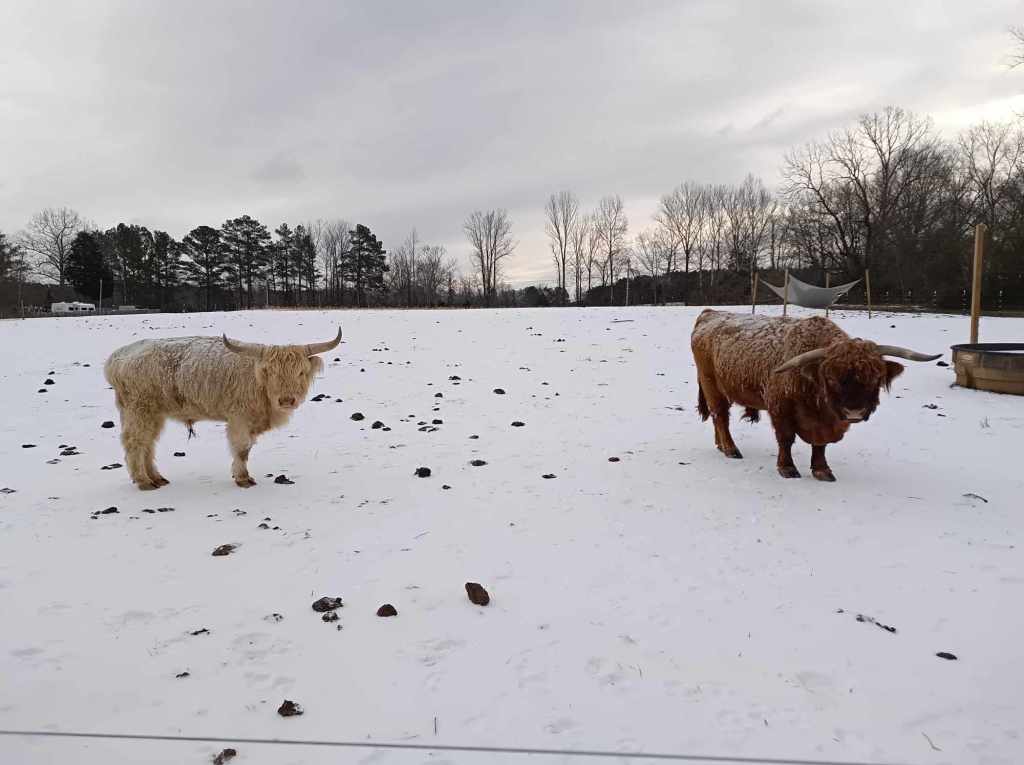
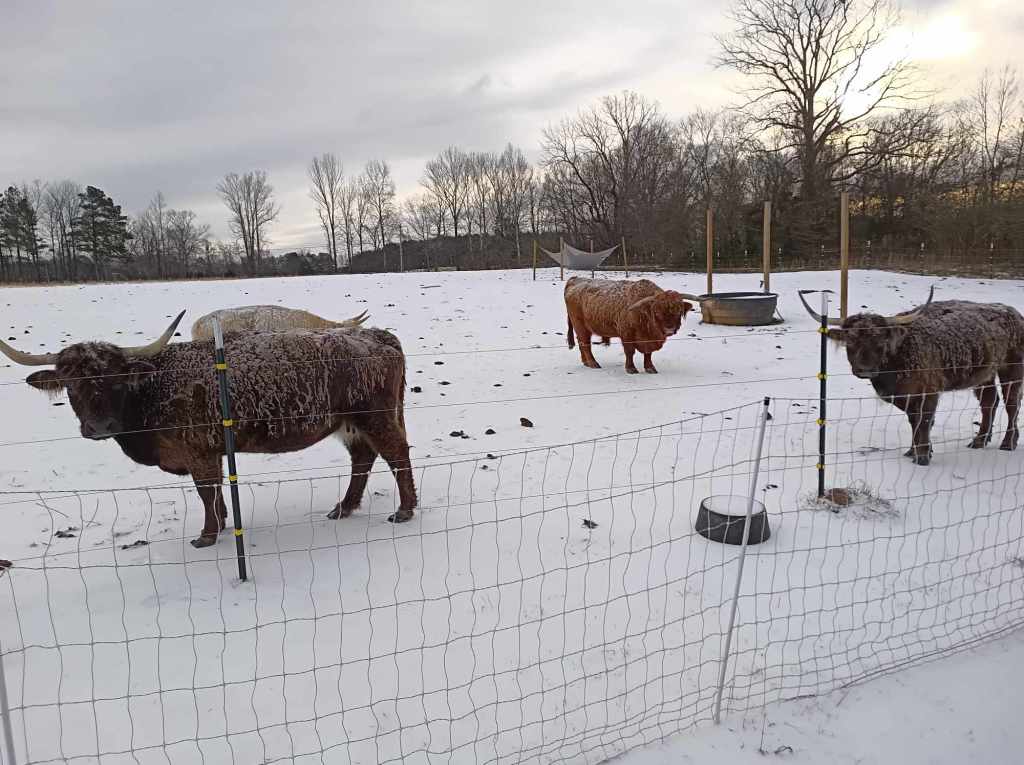
It could be worse, though! At least it’s pretty. Here’s some photos from around the farm right now.. Praying for sun and above-freezing temps soon…

New Life On The Farm (Purple Chickens!)

New baby chicks on our farm has become such a common occurrence that I would not normally even think to mention it.

However, our recent batch of chicks is something unique and special.

These baby chicks are the first chicks ever born from our new breeding program!

We’re making purple chickens!

Over the past couple of years since moving out to the farm, we have probably had a couple dozen different chicken breeds – most of which we’ve raised from baby chicks.

It has truly fascinated me to see the vast differences from one breed to the next.

Barred Rocks, for example, are some of the coolest and most annoying birds you can own.

Why?

Well, for starters, they are extremely curious. From their first day out of the shell, they will always be the first in a mixed batch to step forward to investigate new objects, animals, or people. As they grow, that curiosity turns into intelligence.

Thanks to this intelligence, Barred Rocks quickly learn that humans and other animals are generally only going to interact with them in an unpleasant way – whether that’s being picked up and snuggled, moved to a new coop with fresh pine chips, or given a shot of medicine for a respiratory illness.

Obviously, all of these are good things. But if they aren’t what the Barred Rock wants to be doing in that moment, she will not want to do them.

This curiosity and intelligence combine to create impeccable survival instincts. If a Barred Rock and ten other chickens get lost on the way to their coop at night (not uncommon when the days are quickly becoming shorter), the ten other chickens will likely be found huddled together under a random structure – warm, yes, but vulnerable to attack by predators. The Barred Rock, meanwhile, can be found at the highest point possible for a chicken to reach, even if it takes multiple jumps.

This makes Barred Rocks some of the most annoying birds you can own – but also some of the most fun. They are amazing foragers, can have spunky personalities and are usually more than a little sassy… but they hate being picked up and they will randomly decide that they are going to move out of the coop and live in the trees at night now. Or, they’ll decide that the nest box you provided is not up to their standards, so they will make a new nest in a very concealed, secure spot. Great for incubating eggs if you’re a broody hen, but horrible if you’re a hungry human trying to make a burrito.

The problem with breeding barred rocks, besides their at-times challenging personalities, is that the roosters are absolutely useless. Skinny little things with way too much attitude and far too cocky for their own good. They won’t usually be a good alpha male, and they aren’t very efficient meat birds.

Buffy the Buff Orpington Chicken

Every breed has their quirks.

Buff Orpingtons were an early favorite of mine. My favorite chickens (and one of my best friends) was a Buff Orpington, creatively named Buffy. She was one of our first chickens and grew up riding on my shoulder or hat while I did my farm chores in the morning. She would act like she didn’t want to be picked up but once she was placed on my head or shoulders she would refuse to come down and would stare at the world in wonder as we went on adventures together. I even took her with me to the back pasture a couple times and she would always follow along right behind me like a faithful puppy.

Ameraucanas (a popular homestead breed) are reliable egg layers with good personalities, and fairly resilient, but they are small, don’t have the best survival instincts, and lay small to medium-sized eggs. Red Stars are great mother hens and extremely reliable layers. Whiting True Blues are selfish screeching jerks. Whiting True Greens are gentle and friendly but are frequently killed by their own curiosity. Leghorns are dumbasses. In fact, I still have one, and her name is Dumbass The Second. Dumbass The First died by flying over a 4 foot fence into the dog pen… like a dumbass.

Dang! That was an awful lot of text to you to read for me to not even tell you how we’re making purple chickens! Thanks for sticking with me – I’m extremely ADHD and tend to ramble.

All that to say, we tried out a lot of different breeds before choosing one to replicate.

It all started with Buffy the Buff Orpington that I mentioned above. We had a few other Orpingtons and between them and her I developed an appreciation early on for these friendly, quiet, reliable birds with big fluffy butts.

My concern with Buffy and the other Orpingtons was primarily their size. They just aren’t very big birds. And, while Buffy was friendly enough, I was hands-on with her since she was a few days old. My other Orpingtons weren’t like her – they don’t like to be picked up or petted, which is one of my favorite things to do here on the farm. In the winter, chickens make great hand warmers! And if you find a lost or sick chicken or if you are trying to deal with a sassy chicken who won’t let you move her, try this trick… stick her in your jacket! They love that. Especially Orpingtons. My birds love to snuggle into a nice winter coat that’s all zipped up, and they rarely want to come out.

Stop it, Trey! You’re being ADHD again!

…Sorry.

Anyway. I started to check out different Orpington breeds. I got my hands on three baby chicks from an acquaintance that breeds Orpingtons, but all of his go into the same brooder so he wasn’t sure what I’d end up with. I ended up with one MASSIVE Black English Orpington rooster, one extremely large Chocolate Orpington rooster, and one Jubilee Orpington hen.

These chickens were something else! Lemme tell ya… nothing made me happier than seeing those giant fluffy butts bouncing around the yard. But, unfortunately, I didn’t end up with a breeding pair of any of the three breeds, even though they were all supposed to be Chocolate Orpingtons.

I ended up getting a line on some Orpingtons one day, and went out to pick them up. First up were two Chocolate hens and a rooster. Much smaller than mine, but I figured they weren’t done growing. Next, I had a couple Orpingtons with really funky colors – I don’t remember the name of the type. They ended up being sick and didn’t make the transition.

But… at the last minute, the guy I was buying them from managed to get his hands on a perfect breeding pair of rare Lavender Orpingtons! The hen, who I named Henrietta, was sweet as pumpkin pie. Medium sized and happy as a clam to sit snuggled in a nest box all day. The rooster, who I named Ender, was another story altogether. He easily dwarfed even my Hulk of a Black English Orpington rooster, and was probably closer in size to my (at the time) teenage male turkeys than he was to any of my chickens. His plumage looked like he had been drawn by a master painter, and he was assertive and strong but also docile and absolutely indifferent to being picked up and snuggled. I’ve never seen as perfect of a specimen as Ender, and I probably never will again.

Unfortunately, Ender died. (audience gasps)

In my rush to snag the Orpingtons when the opportunity presented itself, I didn’t have time to make a secure breeding coop for these new birds. Less than a couple weeks after I bought them, a fox ran out of the woods in broad daylight and tried to nab Jubee, my Jubilee Orpington hen. Ender attacked the fox and successfully got him off of Jubee – but got dragged off into the woods himself for his trouble. I tracked him through the woods and found feather evidence where he had clearly escaped six separate times, but as best as I could tell from the evidence, the sixth time he escaped he actually ran into the fox’s den thinking it would be a safe cover.

So, back to square one. Or, square one and a half, since I at least had Henrietta.

A couple months later, I found someone about an hour and a half away who had four Lavender Orpington roosters she was selling very cheap because she had raised them to be meat birds but couldn’t bring herself to butcher them because they had such sweet personalities.

Well, she was right about the sweet personalities. These four roosters were inseparable. They never fought each other, stayed glued to each others’ side at all times, and shared all of their resources. They also didn’t eat any feed I put out for them, preferring to wander deep into the woods to forage. No complaints!

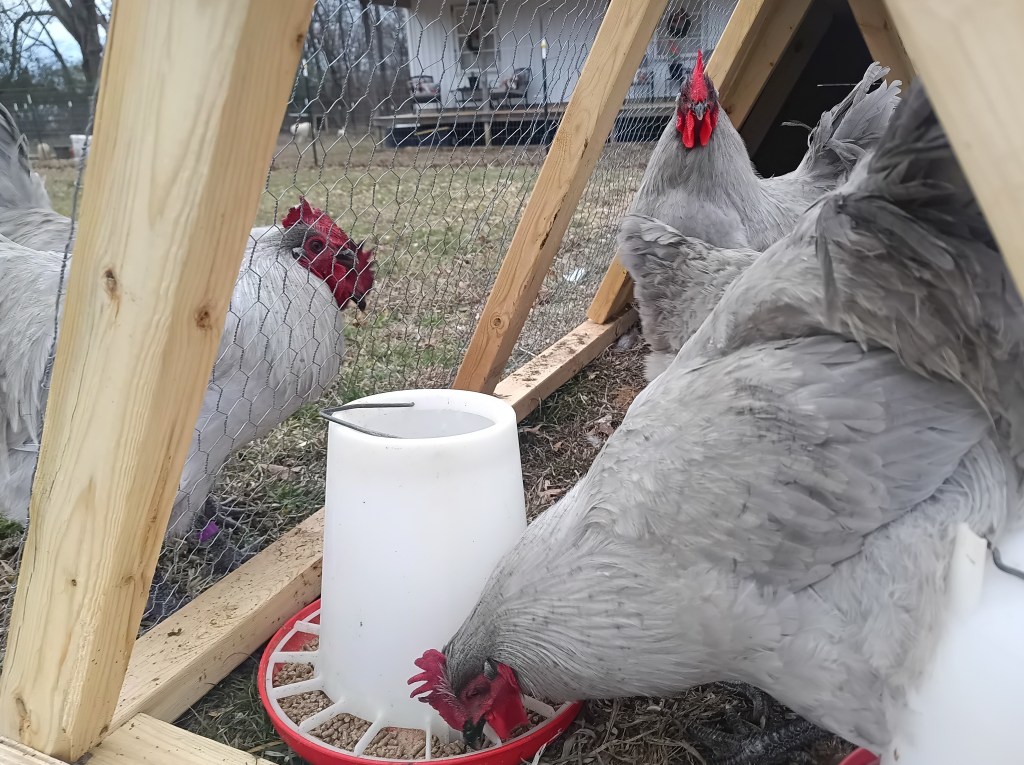
Technically, all five Lavender Orpingtons are visible in this photo, although two of them just have tail feathers in it. And yes, they are eating feed, but that was after I started putting them in the breeding coop where that was their only option, so they were used to it by the time I took this photo.

While none of these four roosters held a candle to Ender’s genetic superiority, they were all excellent examples of the species. Given my luck so far, I was happy to get four of them in case anything happened. It is very common to lose birds during a transition period due to new diseases they’d never been exposed to, stress, and other factors.

Sure enough, one died a few weeks later – never did find out why. As docile as they were, they were getting picked on by my more dominant roosters who resented four new large and impressive-looking roos suddenly moving in. Things tend to get tense when you have more than one rooster per ten hens. I think he may have just taken a really bad peck in the wrong spot.

One of them got sick and died – again, not uncommon when moving adult birds to a new environment full of germs and bacteria that their immune system has never encountered.

A third one, the alpha of the foursome, recently got his head stuck in a hay bale. Not the brightest bulb in the economy pack. His brother snuggled up to him to keep him warm and to draw attention to his predicament, and I was able to save him – but not before he’d spent an entire day stuck between two hay bales in freezing temperatures. He’s still alive, but he got frostbite on his comb and appears to have been oxygen deprived long enough that he may have brain damage. He may or may not make it. The fourth one is still perfectly fine.

While all this was going on, however, I had Henrietta on a rotation in her new breeding coop – swapping out a new rooster every week. She was probably the happiest animal on our farm and laid me a new fertilized egg every single day even in the deep winter. I add eggs to the incubator once a week to avoid too many temperature and humidity fluctuations, so the first batch had 7 eggs.

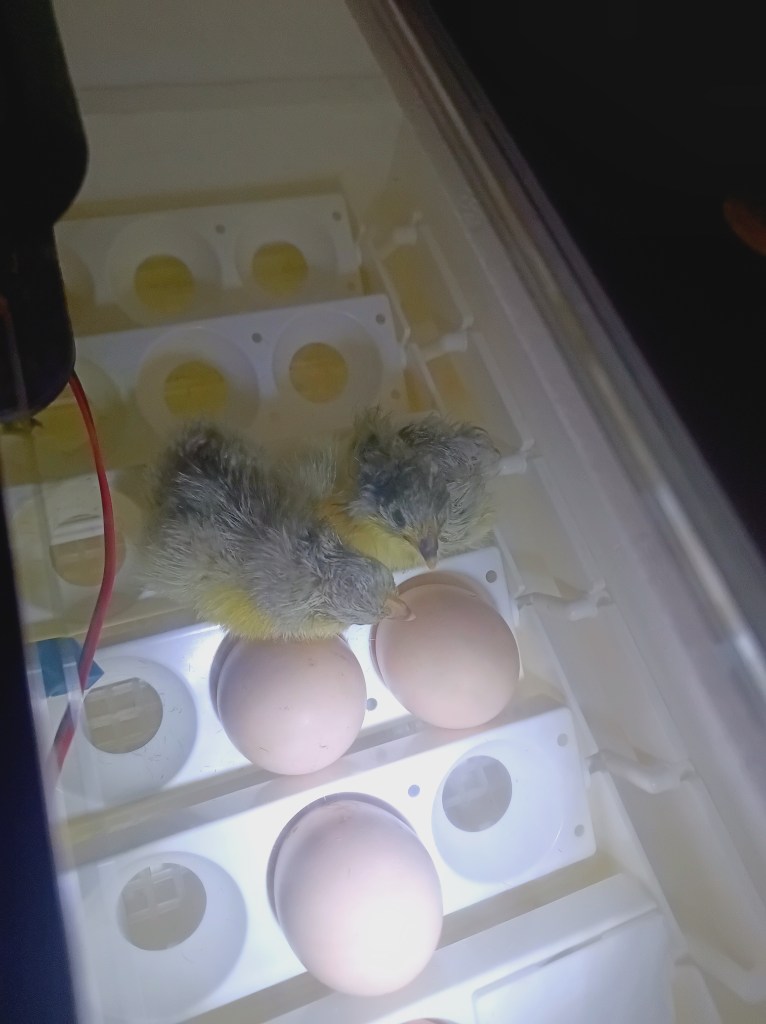
Sure enough, three weeks later, the first eggs started cracking open in the incubator! We appear to have ended up with one Chocolate/Lavender cross. In case you don’t know, rooster sperm can remain in the hen ovum for a couple days before fertilizing an egg, so that was from before she went into the breeding coop.

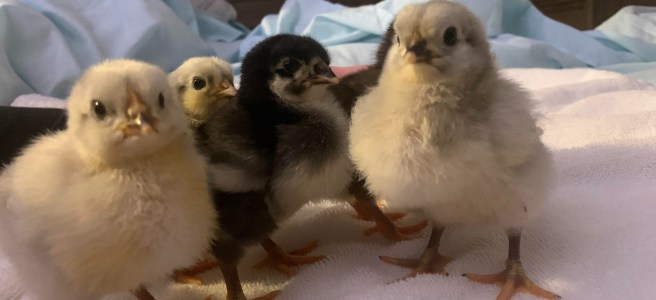
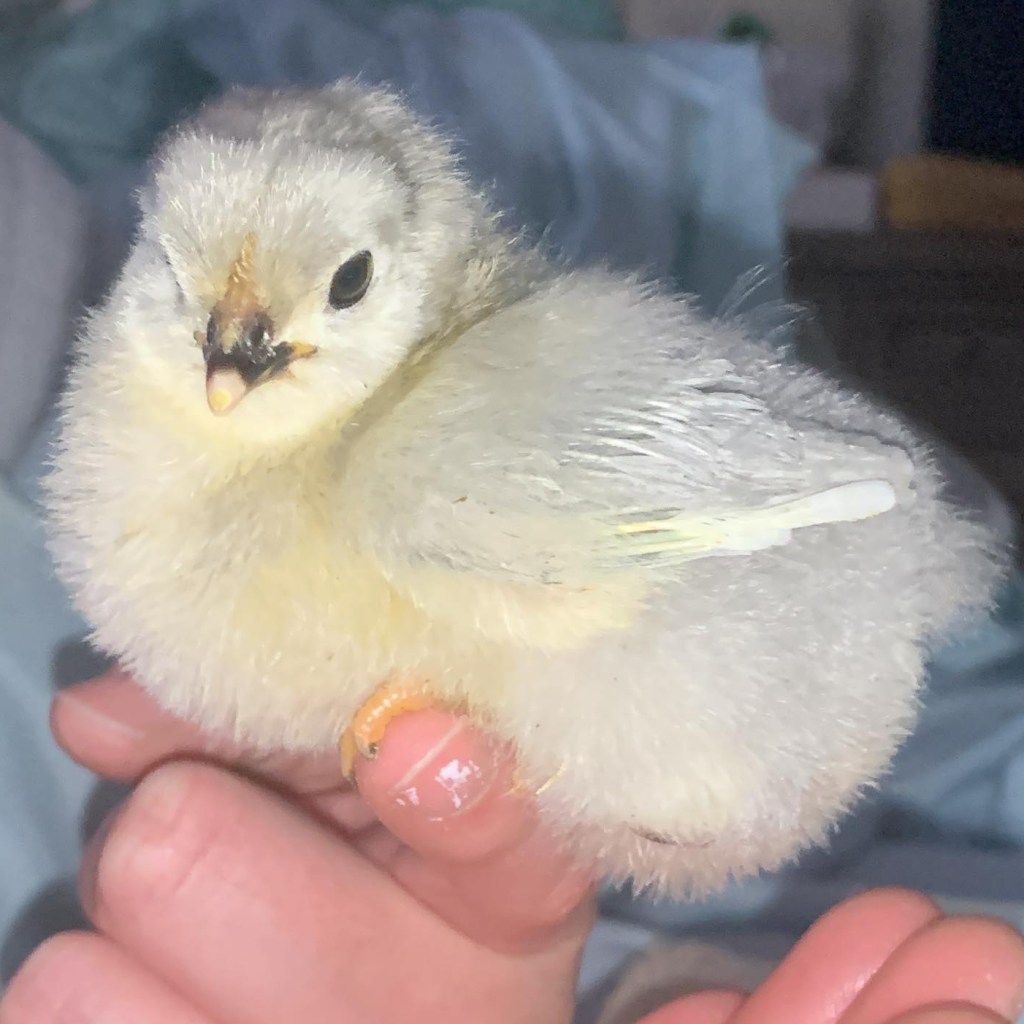
The next four eggs came out perfectly – three grey babies and one black one! Overall, we had five chicks out of seven eggs, which was impressive considering that I accidentally left the water plug out on the table and their humidity was in the 20s and 30s for the first half of their development.

It’s always funny when I tell people about my “Purple Chickens” because at this point I usually pull out my phone and show them some photos.

“But wait… THOSE AREN’T PURPLE!”

Okay… technically… they aren’t purple.

But they are called Lavender Orpingtons, so I will continue to refer to them as my Purple Chickens, or Purple Bois. Why? It’s fun! And life isn’t worth living if you aren’t having fun every now and then.

In order to breed Lavender Orpingtons, you actually need at least one Black Orpington rooster. You have to mix that black gene back into the gene pool every 3 or 4 generations or their color gets really washed out and their feathers have quality issues. That’s why I said that 3 greys and 1 black chick were perfect. It may grow up a Lavender after all, or it may grow up Black. Either way, it’s perfect.

Lavender Orpingtons are, quite simply, the best.

Why? Here’s ten reasons why these rare Lavender Orpingtons are the best chicken breed ever:

  1. They are massive. Just freakishly massive.
  2. Roosters are extremely non-agressive, but also assertive in their flock and highly protective of their hens.
  3. Hens are reliable layers of medium-to-large pink eggs.
  4. Both genders are very docile.
  5. Both genders are excellent foragers for free ranging but also perfectly happy to live in a coop. In fact, my Lavender Orpingtons confined to a coop honestly seem much happier than my free ranging birds.
  6. Due to their size, they are a fantastic dual-purpose breed – meaning they work equally well for eggs or for meat.
  7. Also due to their size and extremely fluffy butts, they are unable to fly over fences. I have a lot of animals in various pens and have lost quite a few chickens to “suicide missions” when they fly over the fence to the dog pen for no apparent reason (it is NOT near their coop). My main coop is also a movable coop with Premiere One electric netting around it and many breeds (*cough cough* Red Stars *cough cough* Barred Rocks *cough* Leghorns *cough*) fly right over that. While I normally prefer to free-range my birds, it is very important to be able to keep them inside the netting when I’ve recently spotted foxes or coyotes in the area.
  8. They don’t mind being picked up. Like all birds, they will often avoid being picked up because they don’t want to be seen as less dominant in front of their other bird friends, but they do not mind being held or petted at all once picked up.
  9. They are as sweet as pumpkin pie. I may be a little biased, but their precocious personalities seem above and beyond all of the other chicken breeds we have here on our little homestead. They are loyal to a fault, eager to share their resources with their friends, and would rather snuggle each other than fight.
  10. They are absolutely gorgeous. Their coloring is so unique – light grey with a light purple tinge. While not “purple” per se, the term “Lavender” certainly fits them to a T.

We’ve kept this first batch so that we can grow them out and start “making” more than one bird per day in a few months. But new chicks are available for purchase.

In the dead of winter right now I can only guarantee 1 or 2 per week but Henrietta sometimes lays 7 eggs a week even in freezing temps. So far, 100% of her eggs have been fertilized. Once things warm up at all, I can confidently guarantee 3-4 per week.

1-to-2-week-old unsexed chicks will be available for $10 each or 5 for $40.

(a minimum order of 3 is required if you do not already have chickens, since chickens will die if they are alone)

Orders can be placed up to 3 weeks in advance, and can be ordered anytime by e-mailing middleforkfarmsal@gmail.com or texting 256.856-9285. Right now we can only do local orders (we are in Franklin County, Alabama), but I do hope to ship eventually.

As a reminder, we do also have chicken eggs ($3/doz) and duck eggs ($5/doz) available for local purchase as well. Most of them will be fertilized if you want to hatch them but they’ll be mixed breeds from our free-range flock. All of our birds eat very well and their eggs are very delicious and nutritious.

I have just finished building a second breeding coop, which I have placed my Chocolate Orpingtons in. Once I get some successful hatches from them, they will be available at $7.50/each or 5 for $30.

I am also planning on breeding my Cayuga ducks, Welsh Harlequin ducks, and Blue/Chocolate Kahki Campbell ducks as soon as I can get their respective coops built (no prices yet).

Facebook Hates Farmers

“Don’t let the door hit you on the way out.”

I have always held this policy when leaving a website or social media platform. Announcing your departure generally seems self-serving and attention-seeking to me.

I have never understood the need to make your personal exit into a big drama, except for maybe a brief note for people who want to stay in contact.

This time, however, is different.

I’ve made my living off of social media and marketing for virtually my entire career. I was an early pioneer in the field of Facebook ads and have been running them since before Facebook pages existed. I can confidently say that I have more experience with and understanding of the platform than the vast majority of Facebook employees.

I didn’t make the decision to leave Facebook lightly. I am, however, confident that I won’t be back.

Why?

Because Facebook Hates Farmers.

That’s a bit simplified, as Facebook/Meta seems to hate a lot of people these days. However, after moving to the country a couple years ago and starting a farm, I very quickly realized how far down the fascist thought-control rabbit-hole Facebook has fallen.

If you look at my Facebook feed, it shows a rosy and cheerful picture of farm life. Snuggling with cows, playing with chickens, working on construction projects… as far as my Facebook friends are concerned, life on the farm is great.

In fact, I’ve had many people express shock when I see them in person and talk about farm life. “You don’t post about any of that on Facebook” is the most common response I get.

I don’t post about it on Facebook because I can’t post about it on Facebook.

I’m not here to whine or gripe about everything we’ve been through over the past two years. I consider us to be extremely blessed. Having this farm has given both of us purpose that we didn’t have before, and the animals are like living with an amazing team of much-appreciated employees and friends.

It’s not that things are bad here. It’s that normal, everyday farm life is actively banned on Facebook and all of it’s subsidiaries. And I feel like it is important to talk about it because most people do not know it is happening, since Facebook controls so much of what we see and believe these days.

Those cutesy reels of fluffy cows and chickens aren’t real. I mean, they happened, but they are so heavily staged and censored that it is understandable that you would think that everyday farm/homesteading life actually resembles that.

I’m not talking about farm chores, either.

There are two vital, completely indispensable parts of farm life that are not just banned but actively and aggressively suppressed by Facebook/Meta.

The first of these may seem to make sense on the surface, but it causes far more harm than good. It has to do with a commonly-used phrase among farmers:

1. “Where there is livestock, there is deadstock.”

We believe in and practice a very different type of farming than most farmers. Specifically, my wife and I are advocates of what is called “permaculture” farming, which essentially means to work alongside nature as a partner instead of constantly trying to fight it and force it to change.

One result of this is that our farm actually sees far less death than a normal farm/homestead, thanks to a healthy living environment and an extremely biodiverse local ecosystem. Additionally, we raise our animals with the mindset that our job is to help them survive and thrive, rather than to keep them cooped up. Healthy meat is essential to the diet of any omnivore, humans included. But, just because we eat animals doesn’t mean we have to be jerks about it. Proverbs 12:10 says “A righteous person knows the needs of his beast, but the compassion of the wicked is cruelty.” God commands us repeatedly in the bible to treat livestock and other animals with compassion and care. So, that’s what we do.

Over the past two years, our farm has had virtually no deaths due to disease, malnutrition, or neglect. There are only two small exceptions that I can think of at the moment. We had one baby chick get trampled in a brooder because we accidentally put way too many birds in it thanks to our incubator doing a better job than we expected. We also had three or four adult chickens die from a respiratory disease that was brought onto the farm by some new breeding stock I acquired a couple months ago.

Other than that, every death on this farm has been due to predators or the animal’s stupidity.

And that’s where things start to get weird.

Our local area used to be covered with farms. Thanks to age, drugs, and children not sticking around, most of those farms have completely disappeared over the past decade. I can only think of one real “farm” within a half-mile radius of our house, and that’s a hobby farm with a couple dozen cows or so, similar to ours in size but more well-established.

This phenomenon has resulted in a major predator problem, thanks to the world’s most aggressive apex predator (humans) being largely inactive here except for a very small number of deer hunters during the fall. To make it worse, we are surrounded by overgrown federally-owned land that is not even slightly monitored or maintained by the department that owns it.

The final nail in the coffin is the fact that our animal control department is criminally negligible. They may be underfunded, but I can personally attest to the fact that these incompetent nincompoops know almost nothing about animals and will flat out refuse to deal with any situation that seems even slightly scary, even when lives are on the line. Their repeated refusal to contain feral dogs that literally had to be pried off of the near-dead body of one of my bulls almost killed me earlier this year.

This has caused a massive feral dog problem in my county. In fact, two people were mauled to death by dogs in one recent 12-month period, with a third person ending up comatose for months. Still no change in the activities or attitudes of the local animal control department.

This feral dog infestation cost our farm an estimated $30,000 – $50,000 between mid 2022 and mid 2023, mostly consisting of infrastructure repairs and emergency upgrades, vet bills, dead livestock, time off work, and my own medical bills – because they almost killed me twice, both times in broad daylight.

This problem got so bad that I had to quit trying to farm full-time. I sold cows until I could fit what I had left in my small front pasture where I could keep a close eye on them and build better fences for them. Then, I went back to work. Permanently .

One of the most infuriating aspects of this struggle was the fact that I couldn’t talk about it on Facebook – to anyone.

The first time we had feral dogs attack, I thought a coyote had gotten some of our chickens. I posted in a closed, private group on Facebook specifically for homesteaders asking for advice on how to deal with coyotes – and my post was almost immediately flagged by Facebook. I tried re-wording it several times and appealing it, but Facebook made it very clear that I could not specifically mention wanting to kill any animal, ever, in any context. All while my feed was full of hunters posing with trophies.

As an early adopter of Facebook and someone who has used it as my primary form of communication for well over a decade, I was flabbergasted by the fact that I was banned from asking anyone for advice on how to save the lives of my animals by dispatching an aggressive, invasive, and non-native predator (coyotes are not native to North Alabama). I was told I could discuss trap-and-release, which is extremely damaging to local ecosystems and results in far more animal deaths than otherwise, but I could not discuss any type of responsible and permanent solution to the problem.

I then simply tried posting an update on what had happened, without coming close to mentioning wanting to kill the predators, only to learn that I could not even post about my own farm animals dying, regardless of how they died. I certainly couldn’t post any photos or videos, even though what I tried to post was showing an animal that had survived, although they (one of my two prized Highland bulls) had been severely injured and permanently disfigured.

I see plenty of people make posts about dead animals in various groups, but I understand the Facebook algorithm enough to know that it is easy to get away with it until you get caught once and a red flag is put on your account. After that, your posts are under a(n AI) microscope and your whole account can be taken down in less than a minute if you dare step across their arbitrary and poorly defined line.

As someone whose income at the time relied on doing marketing work and Facebook ad consulting for clients, I couldn’t take risks with my account. So, I stopped talking about life on the farm – except for the occasional cute photo of a fluffy cow or one of my favorite chickens.

This is how censors work. This is how propaganda works. I unfortunately spent the first 8 years of my professional career deep in politics and PR work, so please understand that I am being very literal here, and not exaggerating. Let me say that again: this is how propaganda works. You suppress thoughts that disagree with your agenda by suppressing the speech of those speaking out against it, ensuring that the opposing side’s point of view is never heard in the first place. Once enough people believe your side of the story, the mob rules and they will shut down any dissent.

Facebook’s policies on animals and farming are largely dictated by PETA, and have been for several years. They managed at some point to get several people on the board that dictates these things, and the situation has been getting worse and worse. PETA is a horrible and nasty organization that is responsible for countless animal deaths and environmental damage due to their uncompromising stance on protecting invasive non-native species that effectively wipe out local ecosystems.

Dogs, for example, aren’t typically a problem when domesticated. But once a few feral dogs have babies and those babies have babies, you very rapidly see predators, pets, livestock, and prey alike get wiped out across a fairly large area. Pigs are even more destructive to local environments. Both of these species must be aggressively hunted down and killed by humans once they reach a multi-generational feral status. These are not native species. They are dangerous and destructive and we are responsible for introducing them into the environment, which makes us responsible for permanently removing them from that environment.

Feral hogs and feral dogs are the only two species in my part of the world that will actually hunt, kill, and eat humans – for food or even just for sport. But, heaven forbid PETA finds out we dared to shoot one! You can’t rehabilitate feral animals. Maybe one or two, with enough time, early enough into an infestation, but not an out-of-control and rapidly-multiplying population of them.

So, thanks to Facebook, I was left to fend for myself. I spent weeks trying to find a way to find help and advice via Facebook – valuable weeks that cost me many thousands of dollars, put me in the hospital, subjected me personally to two separate feral dog attacks in broad daylight, and resulted in the deaths of four cows, the near-death of an extremely expensive bull (that still has no ears or vocal chords), and countless smaller animals.

To add insult to injury, I couldn’t even buy my way out of my predicament. Why? Because…

2. Selling livestock is strictly banned on Facebook.

Once my account was flagged as a “coyote killer” or whatever label they use for profiles of farmers trying to survive, I couldn’t get away with anything. All farmers know that they aren’t “allowed” to sell animals on Facebook, but we all do it – in private groups, mostly, using keywords designed to avoid the Facebook censors. I couldn’t even do that anymore.

Imagine being under siege by highly intelligent feral dogs for 12 months straight. That’s what I went through. We suffered massive losses and the only way we survived was by spending a lot of money – on new fences, ammunition, medical bills, etc.

Naturally, I had to sell animals. Especially my cows – who were being killed at a pace of one a week for a while.

Now, imagine being under siege by highly intelligent feral dogs… and not being allowed to do anything about it.

It took weeks and months to make even the smallest amount of progress – in many ways thanks to Facebook. I had animals die while I was trying to rehome them because my posts and profile kept getting flagged and deleted. I kept having to rewrite and re-post my sale posts for weeks before they’d get approved. We almost went bankrupt because I had built a career around using Facebook as my main means of communication and commerce, and it had suddenly been taken away from me, while pretending it was still there for me to use.

Selling livestock is how farming works. You can’t be a farmer and not buy or sell livestock.

I don’t even sell animals for meat at the moment – I sell them as pets! I raise highly intelligent Scottish Highland cows and train them to be kid-safe for small family farms. They are a wonderful way for kids to learn about animals and they inspire so much curiosity and excitement about farming and country living. They are also very productive and hardworking companion animals for homesteads that will live and happily work with you for up to 20 years.

That almost sounds like a cause PETA would be proud of, right? An almost-hippie nature-loving organic chemical-free farm where animals aren’t killed but instead raised to be as healthy, happy, and free as possible? No… instead, shame on me for trying to “profit” off of it!

Also… Facebook is toxic.

I shouldn’t really need to explain this one, and I won’t spend much time on it. Try scrolling your news feed or reading a comment section for more than one minute without having sensational headlines and messages shoved in your face that are designed solely to trigger negative emotions – panic, anxiety, stress, anger, etc. That’s, quite frankly, not a world I want to live in anymore. So, I’m leaving.

Where to?

This is the part where I’m supposed to pitch some fringe social media network with zero chance of ever succeeding… right?

Nah.

The problem is much wider than Facebook. Social media in general is currently toxic, because humanity is toxic. We have all forgotten why we are here on this earth and we have all collectively seemed to have decided that things like human decency and respect aren’t relevant anymore.

So, where to?

Nowhere.

Well, actually, here.

Welcome to my world.

This is an old blog that I occasionally posted articles on, mostly work related. But now, it’s how I will keep up with the world, and it is how you can continue to stay updated on our farm life. If you love my posts about fluffy cows and chickens but are also interested in hearing what life is REALLY like outside the range of the censors, hit that subscribe button or shoot me an e-mail at middleforkfarmsal@gmail.com and I’ll make sure you get updates when I post new articles.

Basically, if you are like me and strongly believe that the human race currently sucks so you’d rather hang out with chickens, fluffy cows, or literally any other animals besides other humans… welcome to Middle Fork Farms.

P.S.: I’ll be updating this website soon… ish. If it frustrates you that some of the information is out of date, you are welcome to come do my farm chores while I fix it.

Back In The Driver’s Seat

“For what will it profit a man if he gains the whole world and forfeits his soul? Or what shall a man give in return for his soul?” – Matthew 16:26

It’s been a long time since I’ve posted here.

I just wrapped up a successful 4-year stint as the full-time marketing manager at an ISP marketing agency. That job was originally offered to me because the owner read my articles that I wrote here on geographic microtargeting.

Once I began my new role, I stopped posting on this site because all of my work during that time was covered by NDAs, and I found it difficult to write articles without talking about my recent experiences.

I recently made a successful exit from that role in order to focus on my personal life moving forward.

COVID changed my perspective on a lot of things. Isolated at home in a new city with very little support network, my wife and I went through an extended period of loss, trauma, and health issues.

Dealing with all of this really brought our priorities into focus. We were forced to think through what was truly important to us, and we decided to take radical action in order to pursue a life that we found truly fulfilling.

So, we sold our brand new 4-bedroom house in the city, and moved to the country… into a one-bedroom cabin with a loft on 30 acres that I had spent over a year tearing down to the studs and rebuilding myself into a farmhouse. It still needs a lot of work, but it finally feels like home here. We bought a herd of fluffy Scottish Highland cattle and 40 laying hens.

I’m sure most of our friends & family thought we were crazy. But who cares? This is our life, not theirs.

Here… here, we are happy.

We may be stressed out – quite frequently at times. We may be hectic. We may be running from one problem to the next. We definitely miss the stable income of my previous job. But here on the creekside among the cows and chickens, we have finally begun to truly experience joy, probably for the first time in either of our adult lives.

We have finally been able to focus on our mental and physical health… I’ve lost 60 pounds in the past year in trying to tame these 30 acres into a working farm.

I try to spend my days doing things that bring me joy. One of my favorite things has always been writing. So, here I am. I’m back.

I still plan on primarily writing about digital marketing – my main source of income is from freelance work, where I consult, train, and manage ads for a small select list of clients.

However, I might also write on other topics that interest me from time to time. I have started a fence-building company, where I hire farmers that need supplemental income to help me build farm fences for farms that need help building them. I love the work and being on-site, but I primarily see myself as a middle man, solving two problems at once – finding income for farmers that need income, and labor for those that need labor.

I might also write about our farming & homestead journey. Unlike the marketing, these won’t be written from the perspective of experience, but from the perspective of curiosity and experimentation, as part of my learning process. We are new to this, but eager students.

Anyway, I hope you choose to stick around. If you are interested in all things digital marketing but don’t care about fluffy cows or fences, probably 80% of my content will still be relevant to you. I’ll be posting tutorials, analysis, strategy tips, and shortcuts that I use as part of my freelance work.

If you’d like me to cover anything in specific, please let me know!

  • Trey

Working From Home: Welcome To The New Normal


So  you’re working from home now. Welcome to the dark side. We have cookies!

As the COVID-19 coronavirus pandemic forces tens of millions of employees home, people are being pushed unexpectedly (and uncomfortably) into a work environment that can be surprisingly rewarding once you get used to it.

I’ve been working remote from home at least part time for my entire adult life – over 10 years. For the past year and a half, I’ve been working a full time salaried position at a marketing agency from my home office. My workspace has taken a wide variety of shapes – from being curled up on my bed in what was basically a tiny home to currently having my own dedicated office in my 4-bedroom house with a standing desk and 4 monitors (see photo at the top of this post).

I know what works, and what doesn’t.

I’m currently quarantined in my home due to the fact that my entire household is experiencing flu-like symptoms. With no easily accessible testing available yet, I don’t know if I have COVID-19… it is just as likely that we have Flu A, according to my doctor. My instructions have been to stay home and stay isolated.

Fortunately, this doesn’t significantly affect me. This is already my life. Every morning, I wake up, walk down the hall to my office and work at my desk for 8-12 hours before clocking out for the day. It puts a damper on my social life, but that is a luxury that I can afford to go without for a while.

Unfortunately, this is not the case for most people. The majority of people are not prepared to work from home. This new reality is very disruptive to their (your) life, adding stress to an already unpleasant quarantine experience.

Since I am trapped at home and unable to volunteer in any other manner, I will be writing a series of blog articles designed to help people like you transition to a work-from-home lifestyle… and love it. There are many advantages to working from home, and many ways to reduce the impact of the disadvantages.

Without further ado, I am going to jump right in and talk briefly on 7 ways you can make working from home an enjoyable and productive experience. I will be fleshing out each of these points in more details in the coming days.

Please share this article with your friends and on social media to help all of us make this transition an easy one.  Please comment on this article with any questions you may have about working from home, and I will do my best to answer them directly and in my future posts.

How To Enjoy Working From Home:

  1. Create a dedicated workspace. This cannot be understated. It will 100% make the difference between you loving and hating working from home. Even if you enjoy noise and the people you are surrounded by, it will drain your productivity and cause added stress. If you don’t realize that now, you will soon. This does not have to involve an elaborate setup – it just means that you need a separate space where you can isolate yourself from outside sounds and interruptions.
  2. Invest in adequate equipment. You don’t need a $3,000 workstation, but you do need a computer that will allow you to work quickly and efficiently. The most important change you can make to your computer setup will be a second monitor, assuming you don’t already have one. This is one of those things that you won’t realize you need until after you’ve gotten it… and then you won’t understand how you ever existed without it. This is because, unlike an office environment, when working from home, you will need that second monitor to talk to other people. You will be using videoconferencing tools like Zoom, Skype, or Slack – and unless you have a second monitor, you won’t be able to do much else until those calls have concluded. You will be shocked at how much of a difference this makes to your workflow and overall productivity.
  3. Get high speed internet. Satellite internet or DSL will not work. Period. The latency is far too high and speed too low for any kind of video or audio call to work. If you live in the city, you’ll need a cable or fiber connection. If you live in a rural area, look online for a “Fixed Wireless Internet Provider” in your area. These companies are typically small local businesses that provide high speed residential internet in rural areas that is many times faster than satellite. They attach a dish to your roof just like a satellite connection, but it is connecting to a local tower within 10 miles of your house instead of a satellite in space 22,000 miles away. If you don’t know of any high speed providers in your area, try searching on www.broadbandnow.com. In a pinch, comment below with your zip code and I’ll try to find one for you myself (I work in this industry).
  4. Pro Tip: Don’t overpay for internet. In a crisis like this, a lot of internet companies are going to try to sell you expensive “Work from Home” plans that you don’t need. You do not need a 1000Mbps (“Gigabit”) connection. Unless you are uploading and downloading large files all day, you likely won’t notice a difference in any connection over 25Mbps – as long as it is a low latency connection (unlike satellite). Even if you download and upload a lot of files, you don’t really need anything over 50-100Mbps. If you can get unlimited data, go for it… but don’t waste money paying extra for a “high speed” connection that you don’t really need.
  5. Plug into your router. A common misconception is that a high-speed wireless connection is basically the same thing as a wired connection with today’s technology. This is not true. It doesn’t matter how fast or reliable your wireless connection is, you will notice a huge difference in the quality of your video and audio calls if you are able to plug your computer into your router directly. This reduces latency and packet loss, the two biggest causes of video/audio issues on calls. This isn’t always possible, and it isn’t absolutely necessary, but it will make a big difference.
  6. Dress to impress. How you dress has a huge impact on how you think, even if you don’t realize it. Don’t sit around in your PJ’s on your couch all day. Put on clothes just like you are going to work – including your shoes. Just trust me on this one. It will allow your brain to accept the transition and shift into a productive state of mind.
  7. Sit up. Don’t lounge around on your couch or bed. Grab a real chair and work at a desk or table. Not only is this good for your posture, but it will do wonders for your mood and productivity levels. Also, come back to work at the same spot every day. Like the point above, just trust me on this one. These are lessons I’ve had to learn myself through years of trial and error.

That’s all I have for now. I’m going to work on fleshing these out into individual articles soon, and I’ll also be writing on additional topics, including:

  • How to build a home workstation
  • How to create a professional background for your webcam
  • What software do you need to work from home?
  • What kind of computer do you need to work from home?
  • What specific peripherals (mice, webcams, etc) will help you be more productive working from home?
  • How to avoid/eliminate distractions
  • How to be productive
  • And more…


What would you like me to talk about? What questions do you have about working from home? Light up that comment section!


Can You Run Facebook Video Ads In Sequence? Yes.

Sequenced video ads are an extremely powerful tool for education campaigns and high-dollar conversions, and are an extremely efficient way to run funnels.  You can show people one video ad until they watch it completely, then show them the next video in the sequence and ensure that they never see the first one again. It’s not simple, but it can be done. 

Article Difficulty Level: Advanced (Extremely!)

This post won’t include screenshots or tutorials. In this post, I’ll be explaining the concepts, then fleshing them out in a tutorial later – hopefully within a week or two.

Please note: As with all of my Advanced articles, I assume you have at least an intermediate-level understanding of the Facebook Ads Manager. 

Have you ever wanted to run video ads to an audience in sequence? There are many valuable uses for this. For example, if you’re trying to convert potential customers on a $1,000+ sale, you may want to show them an ordered series of informational posts, followed by FAQs, then some closing pitches. Or, maybe you’re working with a political organization or non-profit that wants to educate the public on an issue and is looking for an efficient way to do so. Or possibly, you’re just looking for a way to streamline your sales funnel and not waste money continuing to advertise to people that watch your main videos but never show any interest past your initial pitch.

Facebook ads are not necessarily designed to work this way, but the existing infrastructure can be manipulated in order to do so. When I say this, I mean that Facebook has not created any system for automating this. My hope is that they eventually will, but no current system exists (at least that I’m aware of).

“But Trey, what about ad sequencing?”

Ad sequencing on Facebook is not what I’m talking about here, let’s be clear. Ad sequencing shows people ads in a specific order. It cannot be tied to engagement or video views. What I’m talking about is showing someone one video after they’ve finished watching the previous video in your sequence.

Showing someone a series of ads doesn’t work. By my rough educated estimate, the average Facebook user sees over 150 ads per day. How many of those do you actually pay attention to? Very few. It is hard, if not difficult, to run an effective ad sequencing campaign that guarantees that people don’t see the following part of the sequence until they have completed viewing and understanding the previous part of the sequence.

I call this technique Manual Video Sequencing (MVS). Using MVS, you can run a video ad to your audience as many times as necessary until they finish watching Video 1, then run Video 2 to them as many times as it takes for them to watch it before running Video 3 to them. At each stage of the process, you can choose to stop running one or any of your previous video sequence ads to them. So, you can keep running them through Video 3, 4, 5, etc while continuing to show them Video 1, or you can ensure that they are never shown a video preceding their current place in your sequence.

As I said, hopefully Facebook will eventually come out with a tool to automate this. If you are reading this and work at Facebook, maybe you’ll pass this along to the right people. Who knows.

Okay, let’s get to work.

If you’ve read this far into this article, I assume you know what Custom Audiences are, and how they work. You can create a Custom Audience based on the amount of one or more of your specific videos that someone has watched. You can then use that Custom Audience to target people by inserting it into an Ad Set, adding it to a Saved Audience, or creating a Lookalike Audience.

To create a video sequence, you’ll need to upload every single video in your sequence into the Ads Manager. Go ahead and create all of your ads, leaving the targeting blank or randomly targeting a country. You’ll need to publish all the ads and immediately turn the campaigns off so they don’t run. This is because you can’t create a Custom Audience off of a video until you actually upload that video (duh). Even if the videos you’re using have already been uploaded, you’ll need to do it fresh, as your existing videos will already have views, causing those people to see them out of sequence once everything is up and running.

This is very important: You MUST create a NEW Ad Set for EACH video ad. This will not work at all if you put all videos in the same ad set, as you will have custom targeting settings for each video.

There are other ways to upload your videos for audience set up, but the above is the one I usually use. I’ll sometimes upload each ad, then create the next audience in the sequence and apply it one by one, but that’s a bit harder to walk you through if you aren’t already very familiar with the concept. Once you’ve done it for a while and gotten used to it, you may find that to be more efficient – and I’ll try to do a follow-up article at some point explaining the method.

Now, you’ll need to create a Custom Audience for each of your videos. You’ll find this in the “Engagement” section if you’ve never used it before. You will be able to choose your percentage of video watched, and the video(s) you want to apply the criteria to. The percentage you use to move people to the next video in the sequence will vary depending on your objectives. I usually set the first video in the sequence at only 25%, to push people into the funnel easier. Once in your sequencing funnel, I usually only move people to the next stage after they’ve  watched 75-95% of the current video. This will obviously depend on your media and objectives. If you don’t have your CTA or critical info until the end of your video, you’ll need to set it at 95%.

Do this for each of your videos. I usually label them [VIDEONAME] – [%%]% vv, or “Video 1 – 75% vv” – “vv” meaning “video views.”

After this, you’ll want to go back into your ad sets that you’ve created. On Video 1, you’ll target your current audience – whoever that may be. No narrowing. On the ad set for Video 2, you’ll add two Custom Audiences. First, include “Video 1 – 25% vv,” if you used my labeling system. Then, EXCLUDE “Video 2 – 95% vv,” or whatever you set it to. This last step makes sure that they’ll stop seeing each video in the sequence after they’ve watched it. For Video 3, you’ll include “Video 2 – 95% vv” and EXCLUDE “Video 3 – 95%” and so on.

The end of your sequence will depend on your overall marketing objectives. In most cases, the setup will be the same, just without the exclusion audience.

Your overall setup will vary widely depending on your specific marketing goals and sales funnel. I highly recommend creating a mindmap and fleshing everything out before beginning – otherwise you’ll be far more error-prone, and the task will take far longer. I prefer the free version of SimpleMind for this.

If you read this and understood it, please leave me a comment with feedback and any questions you have. I’m going to work on creating a more detailed walk through, and it’ll be helpful to know what information I should add.

Thanks, and see you next time.

Disclaimer: You probably expect a sales pitch now. Nah. I’m just a nerd that likes writing. I hope you enjoy it.