The Joy of Chocolate Orpingtons

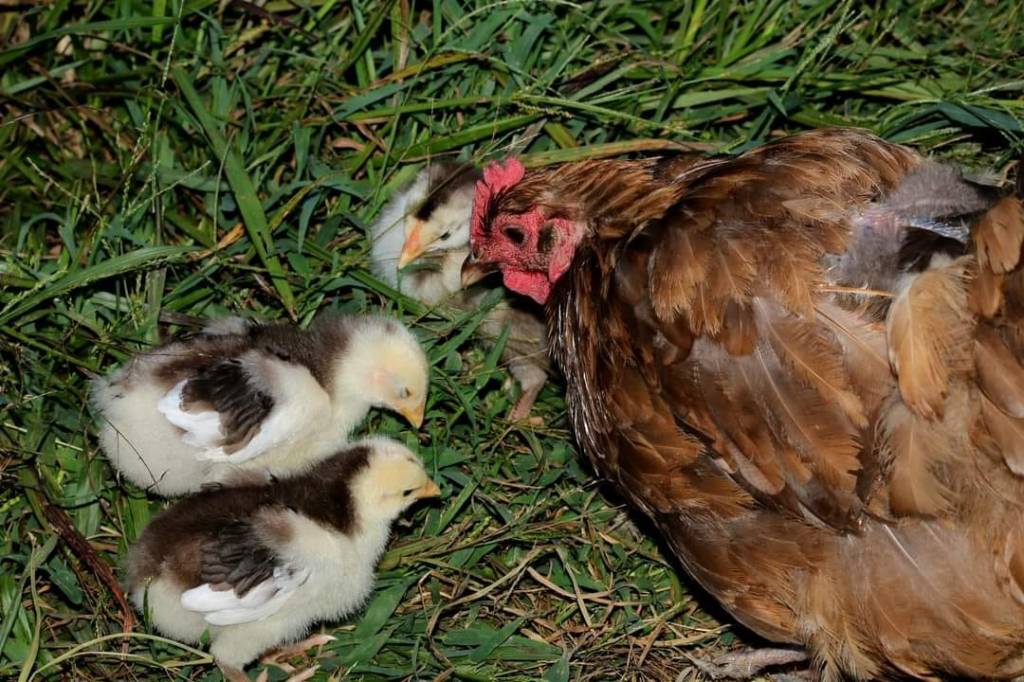
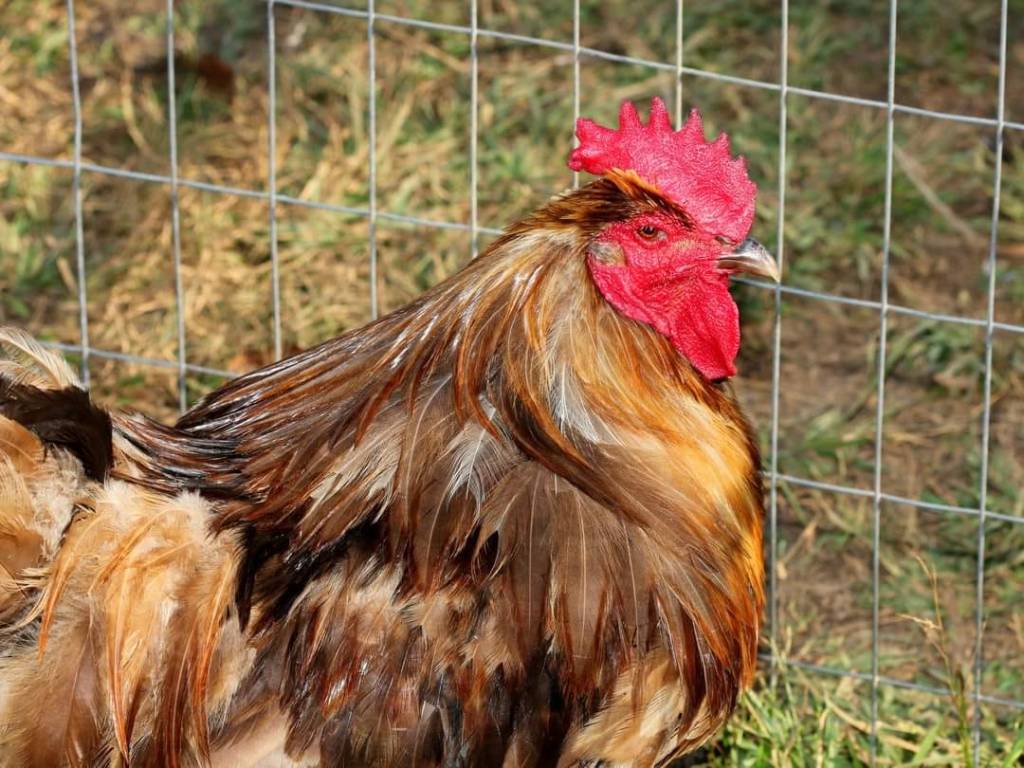
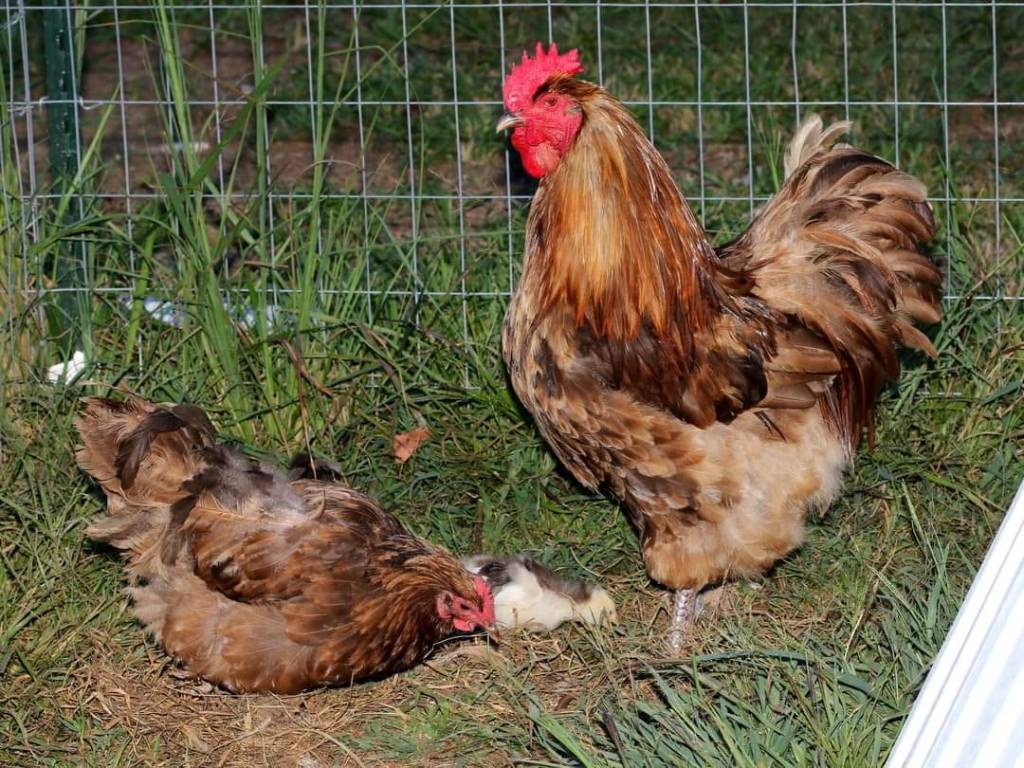
By far my favorite animal family on the farm right now… Charlie The Chocolate Chicken Factory, his wife Sugar Mama, and the four babies they recently hatched.

11 interesting facts about Charlie The Chocolate Chicken Factory and his wife Sugar Mama:

1) They are both purebred Chocolate Orpingtons, and are the basis of our breeding program.

2) Charlie is incredibly huge, the size of some turkeys.

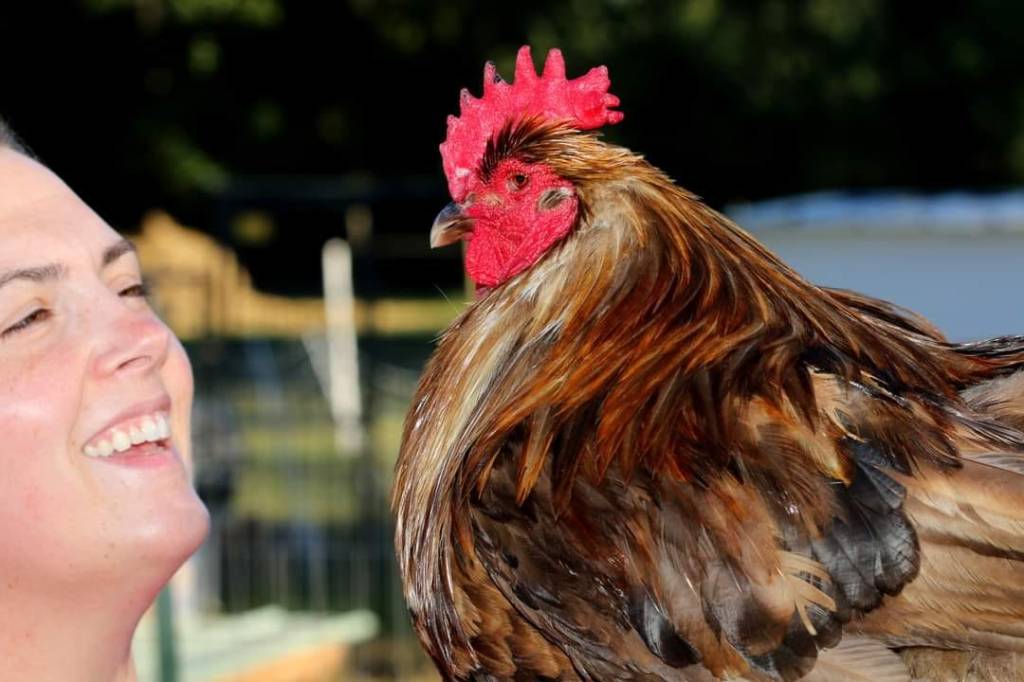
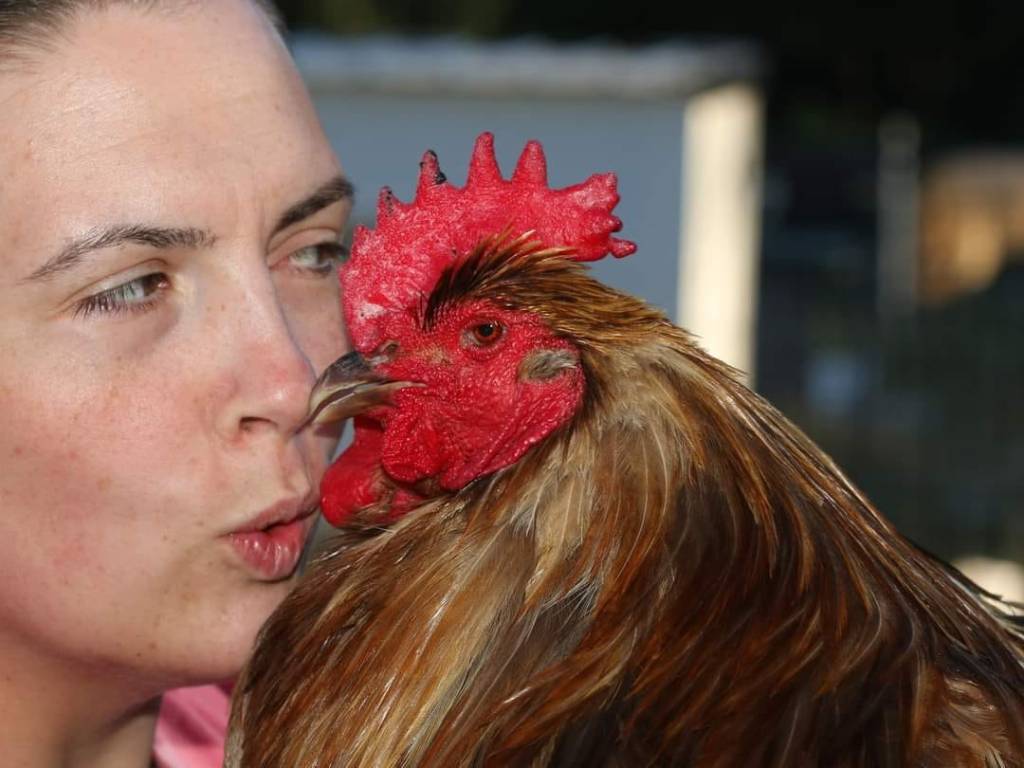
3) Despite his enormous size, Charlie is one of the friendliest roosters on the farm. He is always excited to see his humans, loves being picked up, loves kisses, and will laugh loudly when tickled under his wings.

4) Charlie is a proud and very involved father. He was so excited when his wife decided to hatch her own eggs. As hatch day approached, he scratched out a spot in the dirt within her direct line of sight so he could sit and watch her all day. He loves taking any human newcomers to show off his wife and kids.

5) Charlie loves providing for his family. Despite the fact that he has a full feeder, I always toss him a handful of feed in the mornings so he can scratch it up and take it to go feed his family, which he is always so excited to do.

6) Sugar Mama is probably a third of Charlie’s size but they make the perfect pair. She is super sweet and attentive to her children.

7) Sugar Mama picks up the feed pellets and breaks them into pieces with her beak so they can digest them better. I’ve never seen chickens do this before.

8) When she isn’t laying down letting her babies sleep in her feathers, she is leading them around the pen teaching them various life lessons. She has taught them how to forage, which grasses are edible, which fences are safe to go through, and many more valuable facts of life. She is extremely attentive and stays completely focused on her babies every waking second of every day.

9) Sugar Mama has four chicks because she decided that’s how many she wanted. After she got four, she destroyed the remaining eggs and removed them from her nest. It is amazing to see the amount of thought and planning she has put into starting a family.

10) While we do incubate most of our bird babies, we highly encourage broody mothers. Any female bird that wants to hatch eggs is given full freedom to do so and we will not remove eggs from a bird that is trying to hatch them.

11) We try to sell incubated babies shortly after hatching but if a mama hatches her own babies we will wait until she has finished raising them before rehoming them. As a general principle we believe mama-raised animals always make the best animals.

If interested in buying Chocolate Orpington chickens or any of the other animals we raise (see sidebar), please contact us at middleforkfarmsal@gmail.com.

Facebook Hates Farmers

“Don’t let the door hit you on the way out.”

I have always held this policy when leaving a website or social media platform. Announcing your departure generally seems self-serving and attention-seeking to me.

I have never understood the need to make your personal exit into a big drama, except for maybe a brief note for people who want to stay in contact.

This time, however, is different.

I’ve made my living off of social media and marketing for virtually my entire career. I was an early pioneer in the field of Facebook ads and have been running them since before Facebook pages existed. I can confidently say that I have more experience with and understanding of the platform than the vast majority of Facebook employees.

I didn’t make the decision to leave Facebook lightly. I am, however, confident that I won’t be back.

Why?

Because Facebook Hates Farmers.

That’s a bit simplified, as Facebook/Meta seems to hate a lot of people these days. However, after moving to the country a couple years ago and starting a farm, I very quickly realized how far down the fascist thought-control rabbit-hole Facebook has fallen.

If you look at my Facebook feed, it shows a rosy and cheerful picture of farm life. Snuggling with cows, playing with chickens, working on construction projects… as far as my Facebook friends are concerned, life on the farm is great.

In fact, I’ve had many people express shock when I see them in person and talk about farm life. “You don’t post about any of that on Facebook” is the most common response I get.

I don’t post about it on Facebook because I can’t post about it on Facebook.

I’m not here to whine or gripe about everything we’ve been through over the past two years. I consider us to be extremely blessed. Having this farm has given both of us purpose that we didn’t have before, and the animals are like living with an amazing team of much-appreciated employees and friends.

It’s not that things are bad here. It’s that normal, everyday farm life is actively banned on Facebook and all of it’s subsidiaries. And I feel like it is important to talk about it because most people do not know it is happening, since Facebook controls so much of what we see and believe these days.

Those cutesy reels of fluffy cows and chickens aren’t real. I mean, they happened, but they are so heavily staged and censored that it is understandable that you would think that everyday farm/homesteading life actually resembles that.

I’m not talking about farm chores, either.

There are two vital, completely indispensable parts of farm life that are not just banned but actively and aggressively suppressed by Facebook/Meta.

The first of these may seem to make sense on the surface, but it causes far more harm than good. It has to do with a commonly-used phrase among farmers:

1. “Where there is livestock, there is deadstock.”

We believe in and practice a very different type of farming than most farmers. Specifically, my wife and I are advocates of what is called “permaculture” farming, which essentially means to work alongside nature as a partner instead of constantly trying to fight it and force it to change.

One result of this is that our farm actually sees far less death than a normal farm/homestead, thanks to a healthy living environment and an extremely biodiverse local ecosystem. Additionally, we raise our animals with the mindset that our job is to help them survive and thrive, rather than to keep them cooped up. Healthy meat is essential to the diet of any omnivore, humans included. But, just because we eat animals doesn’t mean we have to be jerks about it. Proverbs 12:10 says “A righteous person knows the needs of his beast, but the compassion of the wicked is cruelty.” God commands us repeatedly in the bible to treat livestock and other animals with compassion and care. So, that’s what we do.

Over the past two years, our farm has had virtually no deaths due to disease, malnutrition, or neglect. There are only two small exceptions that I can think of at the moment. We had one baby chick get trampled in a brooder because we accidentally put way too many birds in it thanks to our incubator doing a better job than we expected. We also had three or four adult chickens die from a respiratory disease that was brought onto the farm by some new breeding stock I acquired a couple months ago.

Other than that, every death on this farm has been due to predators or the animal’s stupidity.

And that’s where things start to get weird.

Our local area used to be covered with farms. Thanks to age, drugs, and children not sticking around, most of those farms have completely disappeared over the past decade. I can only think of one real “farm” within a half-mile radius of our house, and that’s a hobby farm with a couple dozen cows or so, similar to ours in size but more well-established.

This phenomenon has resulted in a major predator problem, thanks to the world’s most aggressive apex predator (humans) being largely inactive here except for a very small number of deer hunters during the fall. To make it worse, we are surrounded by overgrown federally-owned land that is not even slightly monitored or maintained by the department that owns it.

The final nail in the coffin is the fact that our animal control department is criminally negligible. They may be underfunded, but I can personally attest to the fact that these incompetent nincompoops know almost nothing about animals and will flat out refuse to deal with any situation that seems even slightly scary, even when lives are on the line. Their repeated refusal to contain feral dogs that literally had to be pried off of the near-dead body of one of my bulls almost killed me earlier this year.

This has caused a massive feral dog problem in my county. In fact, two people were mauled to death by dogs in one recent 12-month period, with a third person ending up comatose for months. Still no change in the activities or attitudes of the local animal control department.

This feral dog infestation cost our farm an estimated $30,000 – $50,000 between mid 2022 and mid 2023, mostly consisting of infrastructure repairs and emergency upgrades, vet bills, dead livestock, time off work, and my own medical bills – because they almost killed me twice, both times in broad daylight.

This problem got so bad that I had to quit trying to farm full-time. I sold cows until I could fit what I had left in my small front pasture where I could keep a close eye on them and build better fences for them. Then, I went back to work. Permanently .

One of the most infuriating aspects of this struggle was the fact that I couldn’t talk about it on Facebook – to anyone.

The first time we had feral dogs attack, I thought a coyote had gotten some of our chickens. I posted in a closed, private group on Facebook specifically for homesteaders asking for advice on how to deal with coyotes – and my post was almost immediately flagged by Facebook. I tried re-wording it several times and appealing it, but Facebook made it very clear that I could not specifically mention wanting to kill any animal, ever, in any context. All while my feed was full of hunters posing with trophies.

As an early adopter of Facebook and someone who has used it as my primary form of communication for well over a decade, I was flabbergasted by the fact that I was banned from asking anyone for advice on how to save the lives of my animals by dispatching an aggressive, invasive, and non-native predator (coyotes are not native to North Alabama). I was told I could discuss trap-and-release, which is extremely damaging to local ecosystems and results in far more animal deaths than otherwise, but I could not discuss any type of responsible and permanent solution to the problem.

I then simply tried posting an update on what had happened, without coming close to mentioning wanting to kill the predators, only to learn that I could not even post about my own farm animals dying, regardless of how they died. I certainly couldn’t post any photos or videos, even though what I tried to post was showing an animal that had survived, although they (one of my two prized Highland bulls) had been severely injured and permanently disfigured.

I see plenty of people make posts about dead animals in various groups, but I understand the Facebook algorithm enough to know that it is easy to get away with it until you get caught once and a red flag is put on your account. After that, your posts are under a(n AI) microscope and your whole account can be taken down in less than a minute if you dare step across their arbitrary and poorly defined line.

As someone whose income at the time relied on doing marketing work and Facebook ad consulting for clients, I couldn’t take risks with my account. So, I stopped talking about life on the farm – except for the occasional cute photo of a fluffy cow or one of my favorite chickens.

This is how censors work. This is how propaganda works. I unfortunately spent the first 8 years of my professional career deep in politics and PR work, so please understand that I am being very literal here, and not exaggerating. Let me say that again: this is how propaganda works. You suppress thoughts that disagree with your agenda by suppressing the speech of those speaking out against it, ensuring that the opposing side’s point of view is never heard in the first place. Once enough people believe your side of the story, the mob rules and they will shut down any dissent.

Facebook’s policies on animals and farming are largely dictated by PETA, and have been for several years. They managed at some point to get several people on the board that dictates these things, and the situation has been getting worse and worse. PETA is a horrible and nasty organization that is responsible for countless animal deaths and environmental damage due to their uncompromising stance on protecting invasive non-native species that effectively wipe out local ecosystems.

Dogs, for example, aren’t typically a problem when domesticated. But once a few feral dogs have babies and those babies have babies, you very rapidly see predators, pets, livestock, and prey alike get wiped out across a fairly large area. Pigs are even more destructive to local environments. Both of these species must be aggressively hunted down and killed by humans once they reach a multi-generational feral status. These are not native species. They are dangerous and destructive and we are responsible for introducing them into the environment, which makes us responsible for permanently removing them from that environment.

Feral hogs and feral dogs are the only two species in my part of the world that will actually hunt, kill, and eat humans – for food or even just for sport. But, heaven forbid PETA finds out we dared to shoot one! You can’t rehabilitate feral animals. Maybe one or two, with enough time, early enough into an infestation, but not an out-of-control and rapidly-multiplying population of them.

So, thanks to Facebook, I was left to fend for myself. I spent weeks trying to find a way to find help and advice via Facebook – valuable weeks that cost me many thousands of dollars, put me in the hospital, subjected me personally to two separate feral dog attacks in broad daylight, and resulted in the deaths of four cows, the near-death of an extremely expensive bull (that still has no ears or vocal chords), and countless smaller animals.

To add insult to injury, I couldn’t even buy my way out of my predicament. Why? Because…

2. Selling livestock is strictly banned on Facebook.

Once my account was flagged as a “coyote killer” or whatever label they use for profiles of farmers trying to survive, I couldn’t get away with anything. All farmers know that they aren’t “allowed” to sell animals on Facebook, but we all do it – in private groups, mostly, using keywords designed to avoid the Facebook censors. I couldn’t even do that anymore.

Imagine being under siege by highly intelligent feral dogs for 12 months straight. That’s what I went through. We suffered massive losses and the only way we survived was by spending a lot of money – on new fences, ammunition, medical bills, etc.

Naturally, I had to sell animals. Especially my cows – who were being killed at a pace of one a week for a while.

Now, imagine being under siege by highly intelligent feral dogs… and not being allowed to do anything about it.

It took weeks and months to make even the smallest amount of progress – in many ways thanks to Facebook. I had animals die while I was trying to rehome them because my posts and profile kept getting flagged and deleted. I kept having to rewrite and re-post my sale posts for weeks before they’d get approved. We almost went bankrupt because I had built a career around using Facebook as my main means of communication and commerce, and it had suddenly been taken away from me, while pretending it was still there for me to use.

Selling livestock is how farming works. You can’t be a farmer and not buy or sell livestock.

I don’t even sell animals for meat at the moment – I sell them as pets! I raise highly intelligent Scottish Highland cows and train them to be kid-safe for small family farms. They are a wonderful way for kids to learn about animals and they inspire so much curiosity and excitement about farming and country living. They are also very productive and hardworking companion animals for homesteads that will live and happily work with you for up to 20 years.

That almost sounds like a cause PETA would be proud of, right? An almost-hippie nature-loving organic chemical-free farm where animals aren’t killed but instead raised to be as healthy, happy, and free as possible? No… instead, shame on me for trying to “profit” off of it!

Also… Facebook is toxic.

I shouldn’t really need to explain this one, and I won’t spend much time on it. Try scrolling your news feed or reading a comment section for more than one minute without having sensational headlines and messages shoved in your face that are designed solely to trigger negative emotions – panic, anxiety, stress, anger, etc. That’s, quite frankly, not a world I want to live in anymore. So, I’m leaving.

Where to?

This is the part where I’m supposed to pitch some fringe social media network with zero chance of ever succeeding… right?

Nah.

The problem is much wider than Facebook. Social media in general is currently toxic, because humanity is toxic. We have all forgotten why we are here on this earth and we have all collectively seemed to have decided that things like human decency and respect aren’t relevant anymore.

So, where to?

Nowhere.

Well, actually, here.

Welcome to my world.

This is an old blog that I occasionally posted articles on, mostly work related. But now, it’s how I will keep up with the world, and it is how you can continue to stay updated on our farm life. If you love my posts about fluffy cows and chickens but are also interested in hearing what life is REALLY like outside the range of the censors, hit that subscribe button or shoot me an e-mail at middleforkfarmsal@gmail.com and I’ll make sure you get updates when I post new articles.

Basically, if you are like me and strongly believe that the human race currently sucks so you’d rather hang out with chickens, fluffy cows, or literally any other animals besides other humans… welcome to Middle Fork Farms.

P.S.: I’ll be updating this website soon… ish. If it frustrates you that some of the information is out of date, you are welcome to come do my farm chores while I fix it.

Working From Home, Part 2: How To Focus

Read Part 1: The New Normal

This is Part 2 of my ongoing series designed to help people in COVID-quarantine adjust to working from home. 

The #1 question I’ve been asked over my 10 years of working from home is, “How do you stay focused?”

The truth is, it’s hard. I can’t say I’ve totally figured it out. I’m going to be honest, working in the same room (or even the same building) as your refrigerator and your snack supply is not conducive to focus or healthy living. While you might have just chuckled reading that, it’s not a joke. There are many articles out there about “how to focus when working from home,” but they are typically selling some software solution or tool. Those can help, but they ignore the core issues. I’m going to explain those core issues and how to solve them.

There are so many distractions when you work from home. Nobody is watching over your shoulder making sure you are productive – you have free reign of the place. At first, it feels empowering. But after a while, it can become extremely stressful and depressing when you realize that it’s not like working in an office – focus does not come naturally.

Our brains aren’t wired to work from home. It’s not natural to us – at least not yet. Our brains are used to a separation between the work and “play” areas. It is accustomed to flipping that switch when you walk out the door in the morning and flipping it back when you walk back in at night. It can be hard to make the adjustment – especially if you are now suddenly being forced to work from home while quarantined with the rest of your (very noisy) family.

So, let’s fix the problem. There is no mountain that hasn’t been climbed. I’ve been working from home for 10 years – how do I do it? At first, it was difficult. Now, it’s easy – even natural. I don’t mind the idea of working in an office environment, but now that I’ve adjusted to working from home, I would hate to have to give up the many perks that come with the lifestyle. Here are 5 REAL ways to focus when working from home:

  1. Isolate yourself. There are multiple ways to do this. If you have the option, close yourself off in a separate room while you are working. If you ever transition to not-work, leave the room. This will help your brain adjust by giving it an alternative work space where it can flip that switch and be productive. You are wired to see work and life as two separate existences. Creating a separate space within your home will help you adjust to that transition. If this is not an option for you, there are other ways to isolate yourself – the best way I’ve found is to use noise canceling headphones and fill your ears with background noise – music, white noise, or even a TV show. I like to play TV shows that I’ve watched 10 times already (most of those times doing this same thing) on a separate monitor or computer. I have no need to pay attention because I already know everything that’s going to happen, but it provides a constant background chatter of real people having conversations. Growing up in a large family, I have a hard time focusing in silent environments, so this one works well for me. Only do this if you won’t get distracted by it, though.
  2. Communicate. You need to sit down with your entire family and have a productive conversation about boundaries during work hours. Everyone needs to have clear and well-understood regulations about when they can and can’t interact with you. Setting these boundaries won’t work 100%, but even if it cuts out 50% of your distractions during the day, that will be a huge improvement. Make sure you explain to your spouse and especially your kids that you aren’t trying to avoid them, and that you love them and that you would be spending time with them if you could. In my opinion, it is important to clearly articulate to your children (of any age) the reason that you are working from home now, and why it is important that you are not disturbed (you have to work so you can pay the bills).
  3. Have a regular schedule. Some of you are still required to work regular business hours, while some of you are not. My recommendation is to force yourself to work regular business hours even if you have the option not to. Your brain is already wired to be productive during those hours, and this is not the time to start changing things.
  4. Keep your routine. To continue on my point above, it is very important that you keep to your previously established routine. If you drink coffee at 7:30 every morning – do that. If you leave the house at 7:45 and arrive at work at 8 – walk into your dedicated space at 7:45 and spend 15 minutes listening to a podcast or whatever you do on your commute. This will help your brain flip that switch into productivity mode and be ready to focus at 8.
  5. Dress for work. This is one that most people never think about. 90% of the jokes that my family and friends crack about me working from home are along the lines of “You work from home? Man, I wish I didn’t have to wear pants to work.” If you’ve been sent home to work remotely from quarantine, this may be one thing you are looking forward to. Don’t. Just like I’ve explained above, it is important to follow your existing routine. Wear exactly what you would wear to work. I spend a lot of time on video conference calls, so I wear a company polo to work every day. But on top of that, I typically wear jeans, socks, and an undershirt – just like if I was going to work for the day. Now that my brain is permanently wired to work from home, it isn’t a terribly big deal if I do without a belt or shoes some days (on some rare occasions I’ll even go crazy and wear pajama pants), but my productivity is always significantly improved if I take the time to fully prepare for work before I clock in. That means everything – a shower, beard trim, tooth brush, and all of my clothes – down to my socks, shoes, and belt. It helps me get into an awake and productive mindset and properly prepare for my day.


Here are 5 additional things that I personally do to help myself focus:

  • Use an electric sit/stand desk. I try to stand for at least an hour each day while I’m working, especially during video calls.
  • Taking 5 minute breaks about every hour.
  • Working with a co-worker on a project over video chat when possible (when I find my focus wandering).
  • Working extra in the early morning or late at night to knock out tasks while nobody else is online or awake to distract me.
  • Getting rid of all unhealthy snacks from the house and only keeping healthy, fresh food in the fridge. (This one may not be practical during a quarantine or if you have kids)


Well, there you go. Hopefully this article has been helpful. I’m not selling anything, just sharing what I’ve learned while working from home for the past decade. The key thing I’ve learned is to focus on the core issues and not waste time and energy on all of the many “productivity tools” out there. Once you’ve got the essentials down, these things can help you become more productive. But they won’t ever help you restore your baseline office productivity – you have to do that by working with how your brain is already wired and sticking to your existing routines.

Like this article? Share it!

Any questions? Drop them in the comments!

Working From Home: Welcome To The New Normal


So  you’re working from home now. Welcome to the dark side. We have cookies!

As the COVID-19 coronavirus pandemic forces tens of millions of employees home, people are being pushed unexpectedly (and uncomfortably) into a work environment that can be surprisingly rewarding once you get used to it.

I’ve been working remote from home at least part time for my entire adult life – over 10 years. For the past year and a half, I’ve been working a full time salaried position at a marketing agency from my home office. My workspace has taken a wide variety of shapes – from being curled up on my bed in what was basically a tiny home to currently having my own dedicated office in my 4-bedroom house with a standing desk and 4 monitors (see photo at the top of this post).

I know what works, and what doesn’t.

I’m currently quarantined in my home due to the fact that my entire household is experiencing flu-like symptoms. With no easily accessible testing available yet, I don’t know if I have COVID-19… it is just as likely that we have Flu A, according to my doctor. My instructions have been to stay home and stay isolated.

Fortunately, this doesn’t significantly affect me. This is already my life. Every morning, I wake up, walk down the hall to my office and work at my desk for 8-12 hours before clocking out for the day. It puts a damper on my social life, but that is a luxury that I can afford to go without for a while.

Unfortunately, this is not the case for most people. The majority of people are not prepared to work from home. This new reality is very disruptive to their (your) life, adding stress to an already unpleasant quarantine experience.

Since I am trapped at home and unable to volunteer in any other manner, I will be writing a series of blog articles designed to help people like you transition to a work-from-home lifestyle… and love it. There are many advantages to working from home, and many ways to reduce the impact of the disadvantages.

Without further ado, I am going to jump right in and talk briefly on 7 ways you can make working from home an enjoyable and productive experience. I will be fleshing out each of these points in more details in the coming days.

Please share this article with your friends and on social media to help all of us make this transition an easy one.  Please comment on this article with any questions you may have about working from home, and I will do my best to answer them directly and in my future posts.

How To Enjoy Working From Home:

  1. Create a dedicated workspace. This cannot be understated. It will 100% make the difference between you loving and hating working from home. Even if you enjoy noise and the people you are surrounded by, it will drain your productivity and cause added stress. If you don’t realize that now, you will soon. This does not have to involve an elaborate setup – it just means that you need a separate space where you can isolate yourself from outside sounds and interruptions.
  2. Invest in adequate equipment. You don’t need a $3,000 workstation, but you do need a computer that will allow you to work quickly and efficiently. The most important change you can make to your computer setup will be a second monitor, assuming you don’t already have one. This is one of those things that you won’t realize you need until after you’ve gotten it… and then you won’t understand how you ever existed without it. This is because, unlike an office environment, when working from home, you will need that second monitor to talk to other people. You will be using videoconferencing tools like Zoom, Skype, or Slack – and unless you have a second monitor, you won’t be able to do much else until those calls have concluded. You will be shocked at how much of a difference this makes to your workflow and overall productivity.
  3. Get high speed internet. Satellite internet or DSL will not work. Period. The latency is far too high and speed too low for any kind of video or audio call to work. If you live in the city, you’ll need a cable or fiber connection. If you live in a rural area, look online for a “Fixed Wireless Internet Provider” in your area. These companies are typically small local businesses that provide high speed residential internet in rural areas that is many times faster than satellite. They attach a dish to your roof just like a satellite connection, but it is connecting to a local tower within 10 miles of your house instead of a satellite in space 22,000 miles away. If you don’t know of any high speed providers in your area, try searching on www.broadbandnow.com. In a pinch, comment below with your zip code and I’ll try to find one for you myself (I work in this industry).
  4. Pro Tip: Don’t overpay for internet. In a crisis like this, a lot of internet companies are going to try to sell you expensive “Work from Home” plans that you don’t need. You do not need a 1000Mbps (“Gigabit”) connection. Unless you are uploading and downloading large files all day, you likely won’t notice a difference in any connection over 25Mbps – as long as it is a low latency connection (unlike satellite). Even if you download and upload a lot of files, you don’t really need anything over 50-100Mbps. If you can get unlimited data, go for it… but don’t waste money paying extra for a “high speed” connection that you don’t really need.
  5. Plug into your router. A common misconception is that a high-speed wireless connection is basically the same thing as a wired connection with today’s technology. This is not true. It doesn’t matter how fast or reliable your wireless connection is, you will notice a huge difference in the quality of your video and audio calls if you are able to plug your computer into your router directly. This reduces latency and packet loss, the two biggest causes of video/audio issues on calls. This isn’t always possible, and it isn’t absolutely necessary, but it will make a big difference.
  6. Dress to impress. How you dress has a huge impact on how you think, even if you don’t realize it. Don’t sit around in your PJ’s on your couch all day. Put on clothes just like you are going to work – including your shoes. Just trust me on this one. It will allow your brain to accept the transition and shift into a productive state of mind.
  7. Sit up. Don’t lounge around on your couch or bed. Grab a real chair and work at a desk or table. Not only is this good for your posture, but it will do wonders for your mood and productivity levels. Also, come back to work at the same spot every day. Like the point above, just trust me on this one. These are lessons I’ve had to learn myself through years of trial and error.

That’s all I have for now. I’m going to work on fleshing these out into individual articles soon, and I’ll also be writing on additional topics, including:

  • How to build a home workstation
  • How to create a professional background for your webcam
  • What software do you need to work from home?
  • What kind of computer do you need to work from home?
  • What specific peripherals (mice, webcams, etc) will help you be more productive working from home?
  • How to avoid/eliminate distractions
  • How to be productive
  • And more…


What would you like me to talk about? What questions do you have about working from home? Light up that comment section!


You Can’t Rush Digital Success

Yesterday, I wrote an article for the digital marketing company I work for (Addison Technologies). It’s about a topic near to my heart that I don’t feel like is talked about enough.

We’ve all seen the videos of some social media “guru” standing in front of a fancy house and fancy car promising us the world if we just follow his super-special formula that only he knows, which you can learn about for a moderate fee. And if you’re a business owner, odds are, you’ve had some young-gun “social media expert” come along and give you a hard sell on their “viral marketing” services, or some such nonsense.

This is a rampant problem. The barrier of entry into social media marketing is virtually nonexistent, and this has led to a sharp rise in the number of fake-it-til-you-make-it “experts” and “agencies” – all willing to promise you the world at bargain prices as long as you sign their contract. I’m in online groups for digital marketing experts that are filled with these types. I’ll see dozens of posts a day from them – “I just landed my first client in [niche] – anybody got any good ideas?!” These people have bought the lie that digital marketing is quick and easy – and now they are selling it to you.

Success online takes time and hard work – just like success at anything else. The REAL experts know this, and they don’t try to sell you flash-in-the-pan strategies that burn out as soon as the ink on your contract dries. Addison Tech has been doing this for 18 years, and I’ve been doing it for 10. We know what it really takes.

In my article for Addison Tech, I talk in depth about the strategies these people use to trick you into giving them money, and how to avoid doing business with them. I’m not pitching anything myself, here – the odds of you being in Addison Tech’s target market are slim. I just want to share some tips that will hopefully help you avoid the traps set by these snake oil salesmen.

Read my full article here.

A Boring Introduction.

Hi, my name is Trey.

I’m a recovering political junkie with a passion for technology. I used to run campaigns for a living – I won 50 non-incumbent campaigns in an 8-year period. Turns out, politics sucks. The clients suck, the drama sucks, the hours suck – it just sucks. I found myself spending 90% of my billable hours dealing with drama that affected nobody and accomplished nothing. After nearly dying from stress-related health problems in late 2016, I made some radical life changes and left that world forever. I quit politics and took an 8-5 job paying a fraction of what I was making. I’ve never regretted it for an instance.

Now, I’m a nerd. I’ve been doing Facebook Ads since before Pages even existed, and it’s kind of what I’ve become known for. I have been consulting on Facebook Ads and social media strategies with businesses, organizations, and politicians for the past eight years. I have an intimate knowledge of the underlying concepts behind the Facebook algorithm that has come from over 12 years of working alongside it as it has grown into the monster it is today. I have developed my own strategies that take advantage of the Facebook algorithm in unique ways to save money and increase Ad conversions.

Beyond Facebook, I’m also a nerd in almost every other aspect of my life. I have a sustainable permaculture homestead/farm where I raise fluffy Scottish Highland Cattle. I love Highlands because they live 15-20 years and are as intelligent as dogs. I train my babies to be excellent pets and working homestead animals and sell them to discerning buyers. I love designing and building things on my farm – from chicken coops to fences to shade shelters.

The purpose of this blog is simple: I like to write. I deleted my old Facebook a few years ago because I could not escape the political world on there. Even after deleting over 1,200 friends, I was constantly inundated with messages and posts from my old life. My health could not bear the constant negativity associated with that crowd. Plus, I had recently married the most amazing woman I’ve ever met – and she deserves the attention that I was devoting to silly social media drama. I still have a Facebook account, but it is solely used to manage pages, stay in touch with close friends and family, promote my farm, and participate in groups.

Follow me – or don’t. It’s totally up to you. I’m merely writing for the sake of writing. I am constantly learning new things and trying to think of creative ways to apply what I already know. I have found that writing about them is the best way for me to remember and process them.

If you are reading this, please leave a comment! Ask me challenging questions, please. Present me with a Facebook ad/algorithm problem or marketing question you’ve been struggling with – I’ll be happy to help.

See you in another post.